A Year Was Celebrated. A Future Was Launched.
One year after an idea became a reality, Shama gathered its community and partners to celebrate a journey built on language, culture, and opportunity, and to ask a bigger question: what becomes possible when refugees are seen not only for what they need, but for what they can build?
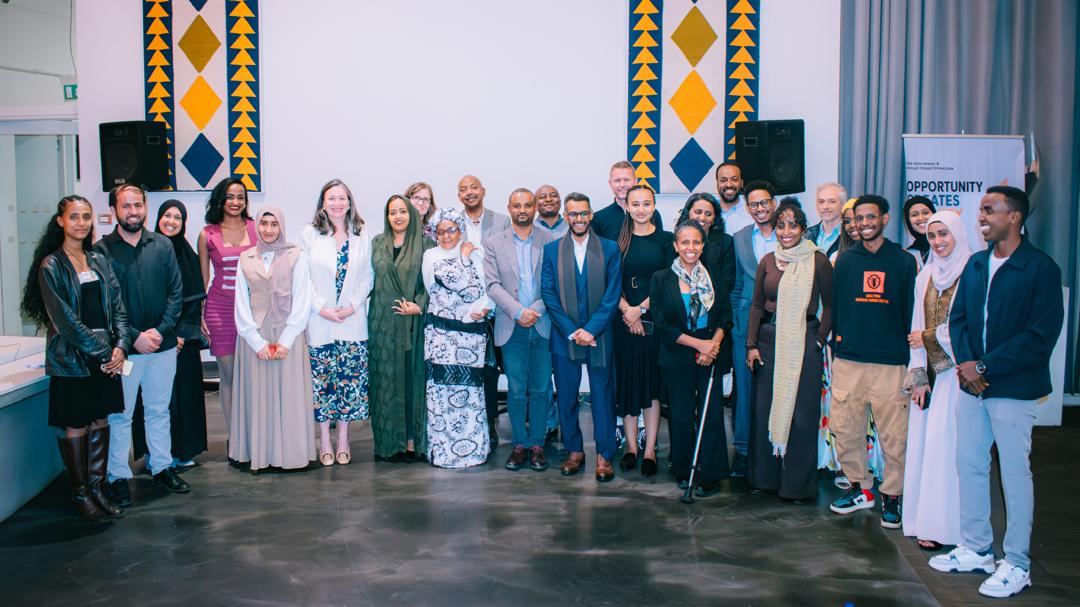
27 August 2026 | British Council, Addis Ababa
Opportunity Creates Dignity
What if an anniversary is not really about looking back?
What if it is about gathering the people who helped make an idea possible, and asking what that possibility can become next?
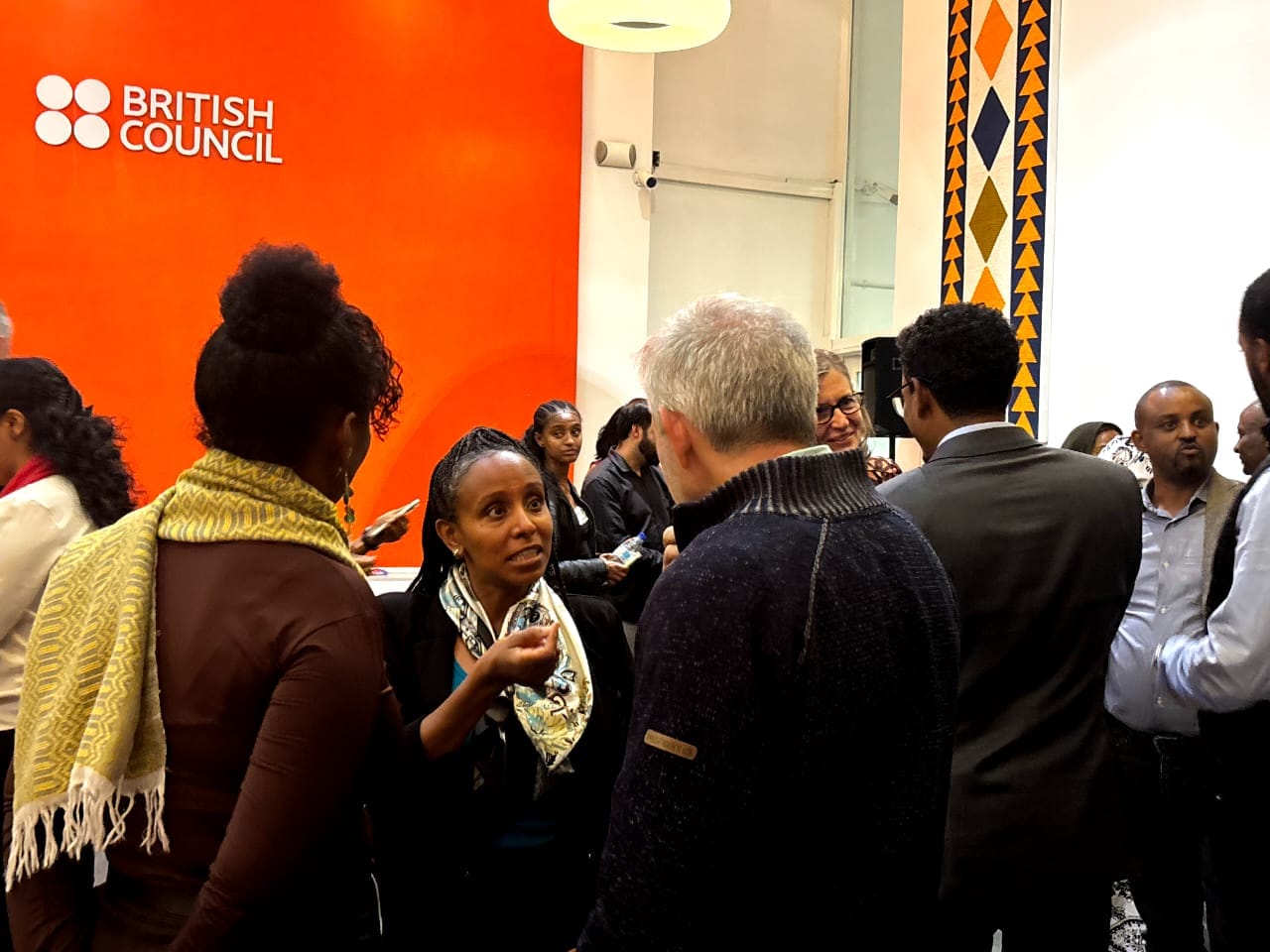
On 27 August 2026, the British Council in Addis Ababa became a meeting point for that question as Shama Institute for Cultural Exchange marked its first anniversary under the theme “Opportunity Creates Dignity.”
The evening brought together government representatives, UN agencies, social enterprise and development leaders, entrepreneurs, artists, learners, tutors, refugee and host communities, partners, and friends of Shama.
It was a celebration of one year, but more importantly, it was a conversation about what becomes possible when refugees are recognized not only through the needs they carry, but through the knowledge, skills, ideas, and ambitions they bring with them.
Opening the Evening
The evening opened with remarks from Mr. Kibret Abebe, President of Social Enterprise Ethiopia and CEO of Tebita Ambulance.
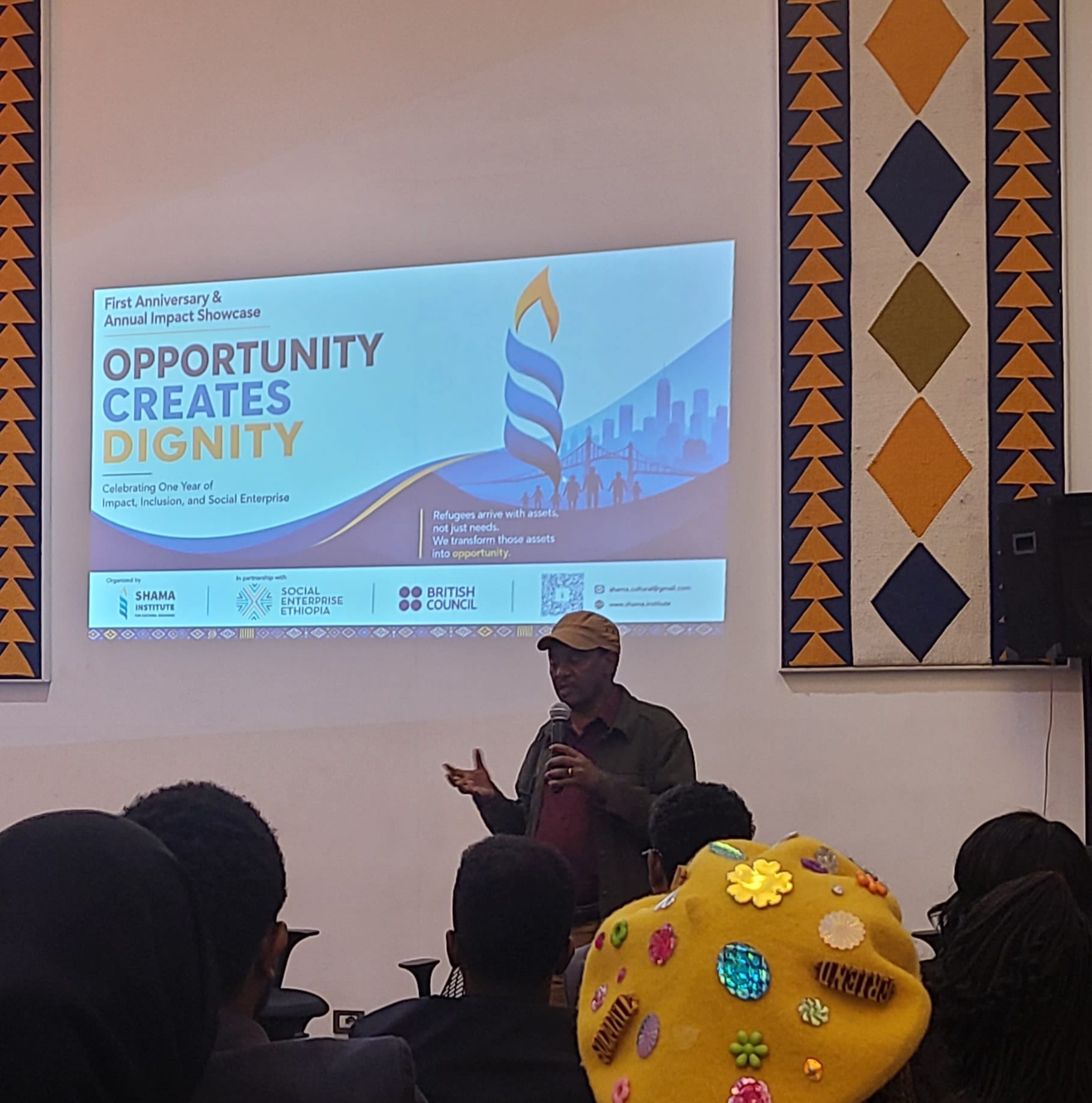
His opening remarks set the broader context for an evening deliberately designed to look beyond one organization and toward a wider ecosystem of economic inclusion, entrepreneurship, and opportunity.
The message was clear from the beginning: the story of Shama is part of a much larger conversation about how societies create space for people to participate, contribute, and build.
Voices from the Ecosystem
The opening reflections continued with keynote speeches from leaders representing government, humanitarian response, and entrepreneurship development.
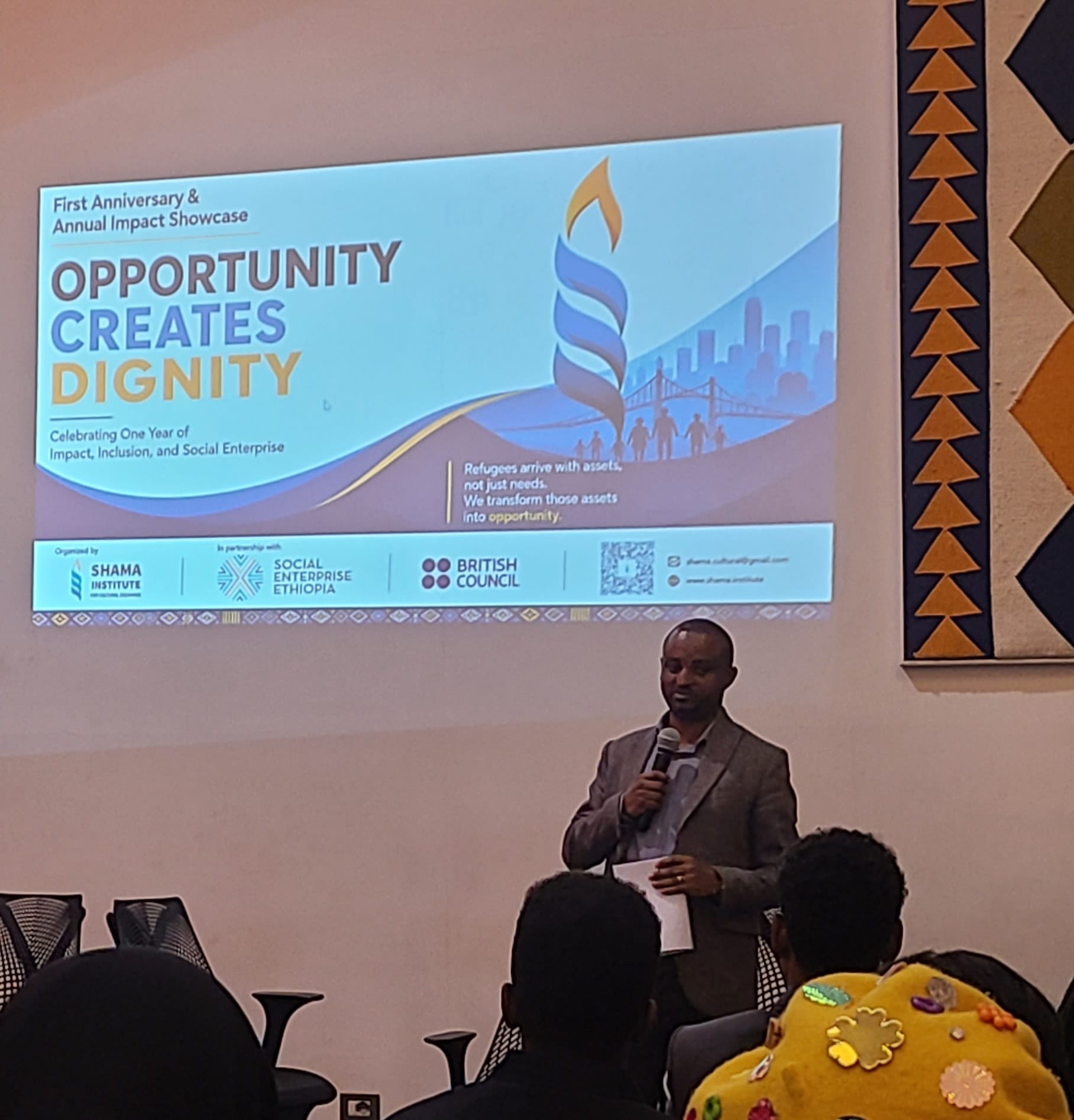
Mr. Mulualem Desta, Deputy Director General of the Refugees and Returnees Service (RRS), brought the government perspective to the conversation, emphasizing the importance of collaboration and coordinated action in creating sustainable pathways for refugee inclusion and economic participation.
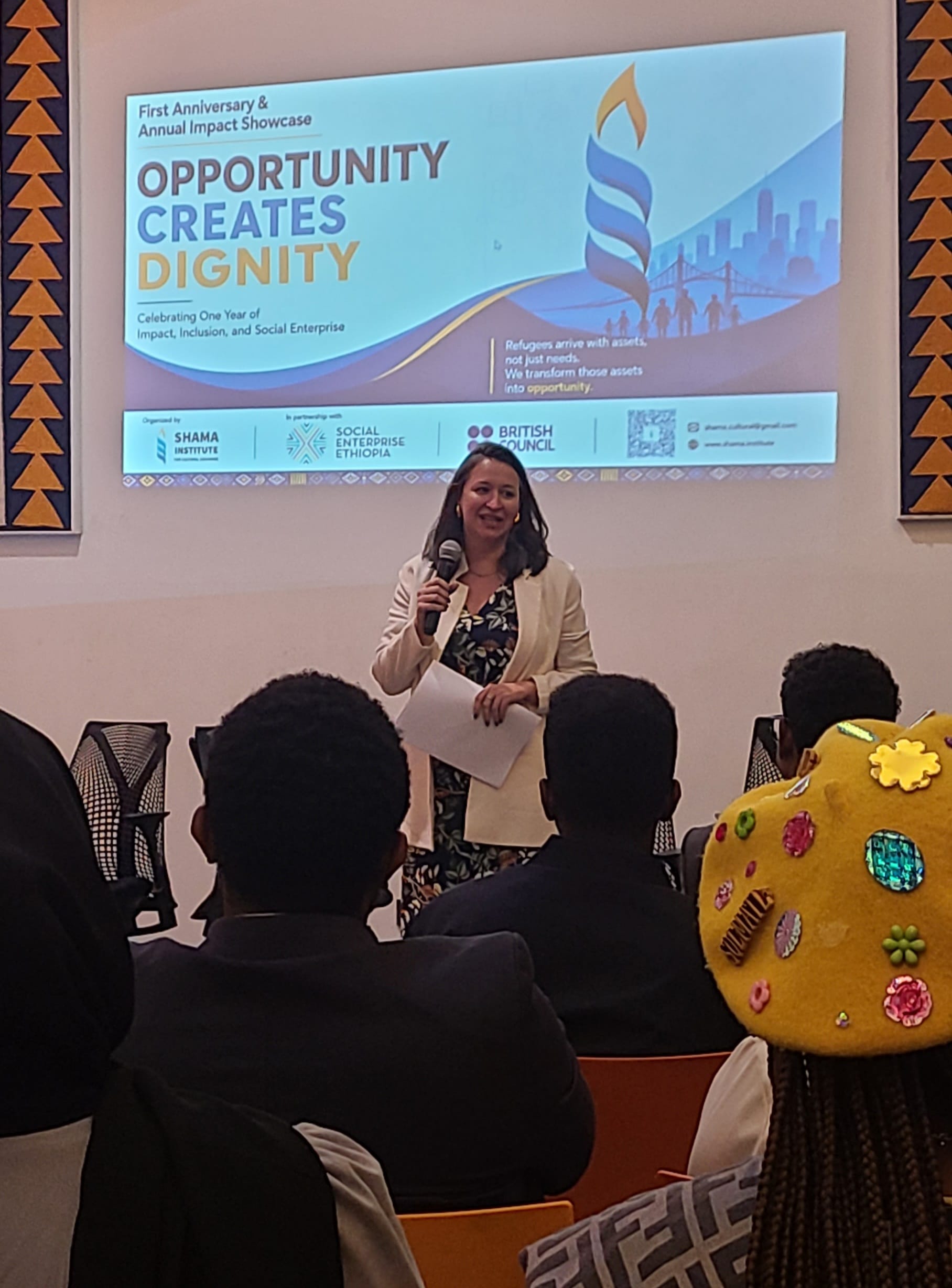
Ms. Richelle Haines, Senior Protection Officer at UNHCR Ethiopia, reflected on the relationship between protection and inclusion. Her remarks underscored that meaningful protection cannot stop at assistance. When refugees have access to work and opportunities to participate in the economy, they gain not only income, but greater dignity, stability, and self-reliance.
As she put it: “To be protected, you really need to be included.”
Her message also highlighted the importance of moving beyond frameworks toward practical opportunities, employment, skills, markets, businesses, and partnerships that allow refugees to become integrated participants in the wider economy.
Ms. Emebet Techane Shiferaw, Communication and Partnership Manager at the Entrepreneurship Development Institute (EDI), connected the evening’s theme directly to entrepreneurship and agency.
Dignity, she emphasized, is not something that can simply be handed to someone through assistance. It becomes possible when people have the agency, tools, and platforms to shape their own futures.
Her remarks reinforced the importance of seeing displaced communities not only as recipients of support, but as professionals, entrepreneurs, artists, innovators, future employers, and contributors to local economies.
Together, these opening voices established the foundation for the rest of the evening: economic inclusion is not a single institution’s responsibility. It is an ecosystem that requires government, humanitarian and development actors, social enterprises, businesses, communities, and refugees themselves to participate.
And it raised a question that would return later in the evening:
How do we move from inclusion as an idea to opportunity as a reality?
A Year, Reflected
The conversation then turned to Shama’s first year.
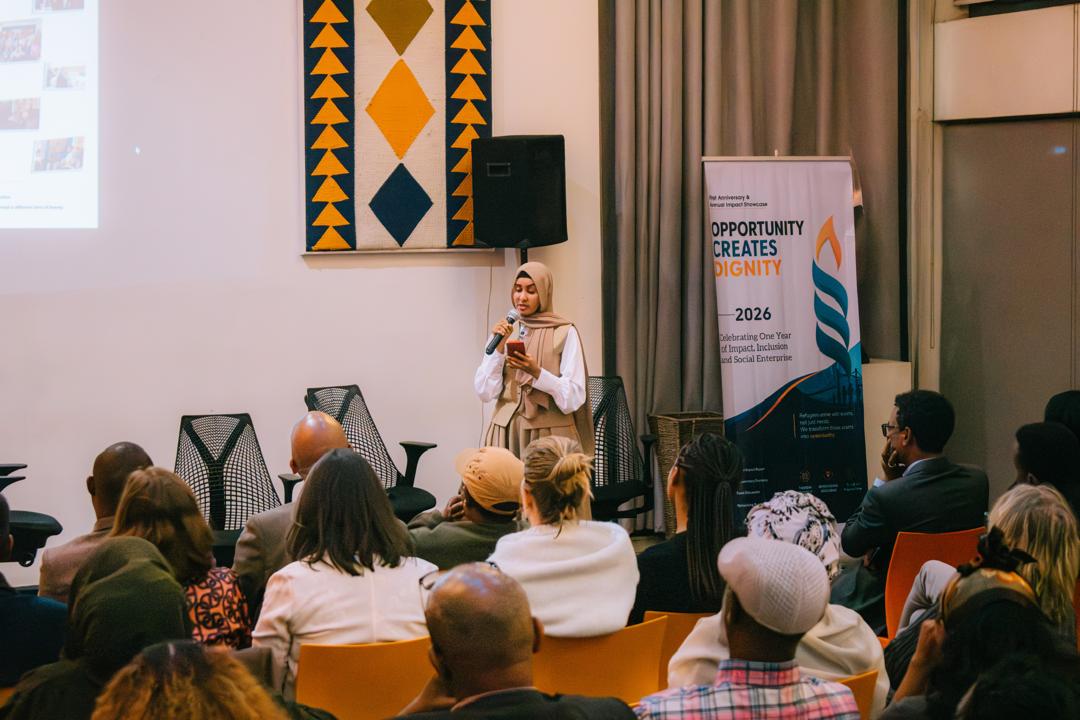
Ms. Faduma Abukar, Project Manager at Shama Institute, presented the Annual Impact Report, offering a record of the organization’s first year and the journey that unfolded across language, culture, education, entrepreneurship, and economic participation.
The report captured the work behind the year.
But the anniversary was not simply a presentation of what had been accomplished. It was an opportunity to pause and ask what that first year had made possible, and where that possibility could lead.
The Founder’s Story
Following the report, Mr. Aziz Hazizi, Founder & CEO of Shama Institute, took the audience deeper into the story behind the organization.
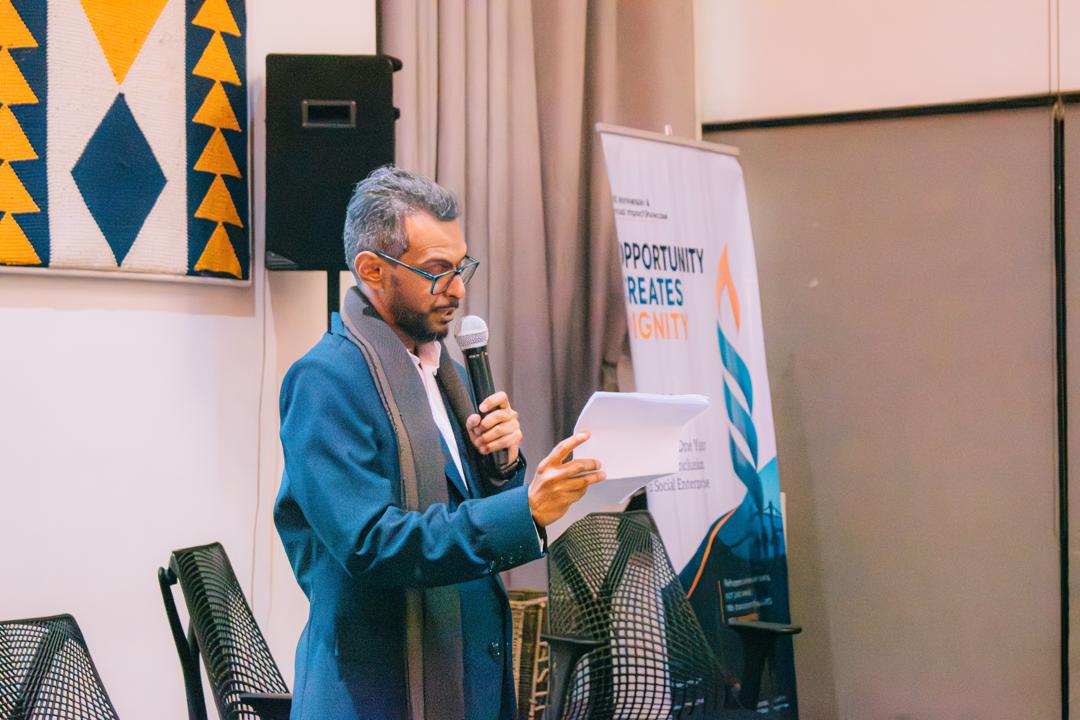
His reflection brought a personal dimension to the evening: the journey from displacement and uncertainty toward entrepreneurship, leadership, and the creation of a refugee-led social enterprise in Ethiopia.
For Aziz, Shama was never intended to be an exception.
It was meant to challenge what people believe refugees can build when they are given the space, trust, and opportunity to do so.
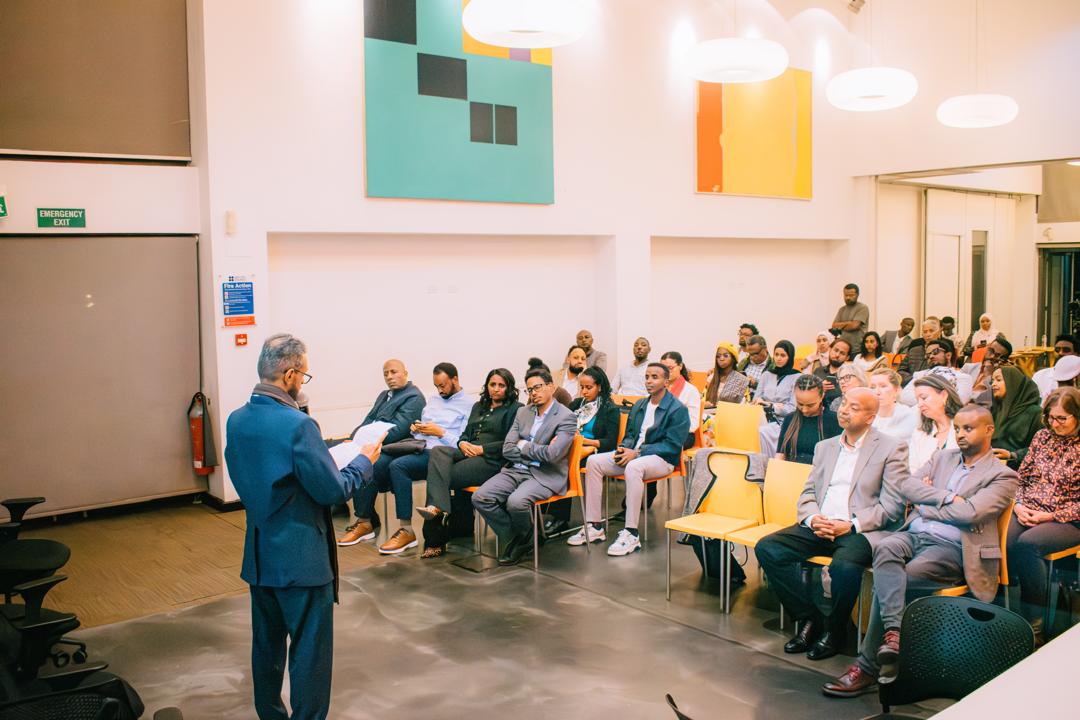
As he put it:
“The goal was never to make Shama the exception. The goal is to make what Shama represents possible for many more people.”
That idea became one of the defining messages of the anniversary: Shama’s first year was not a destination. It was evidence of possibility.
When the Story Came to Life
The audience was then invited to watch a documentary capturing moments and experiences from Shama’s first year.
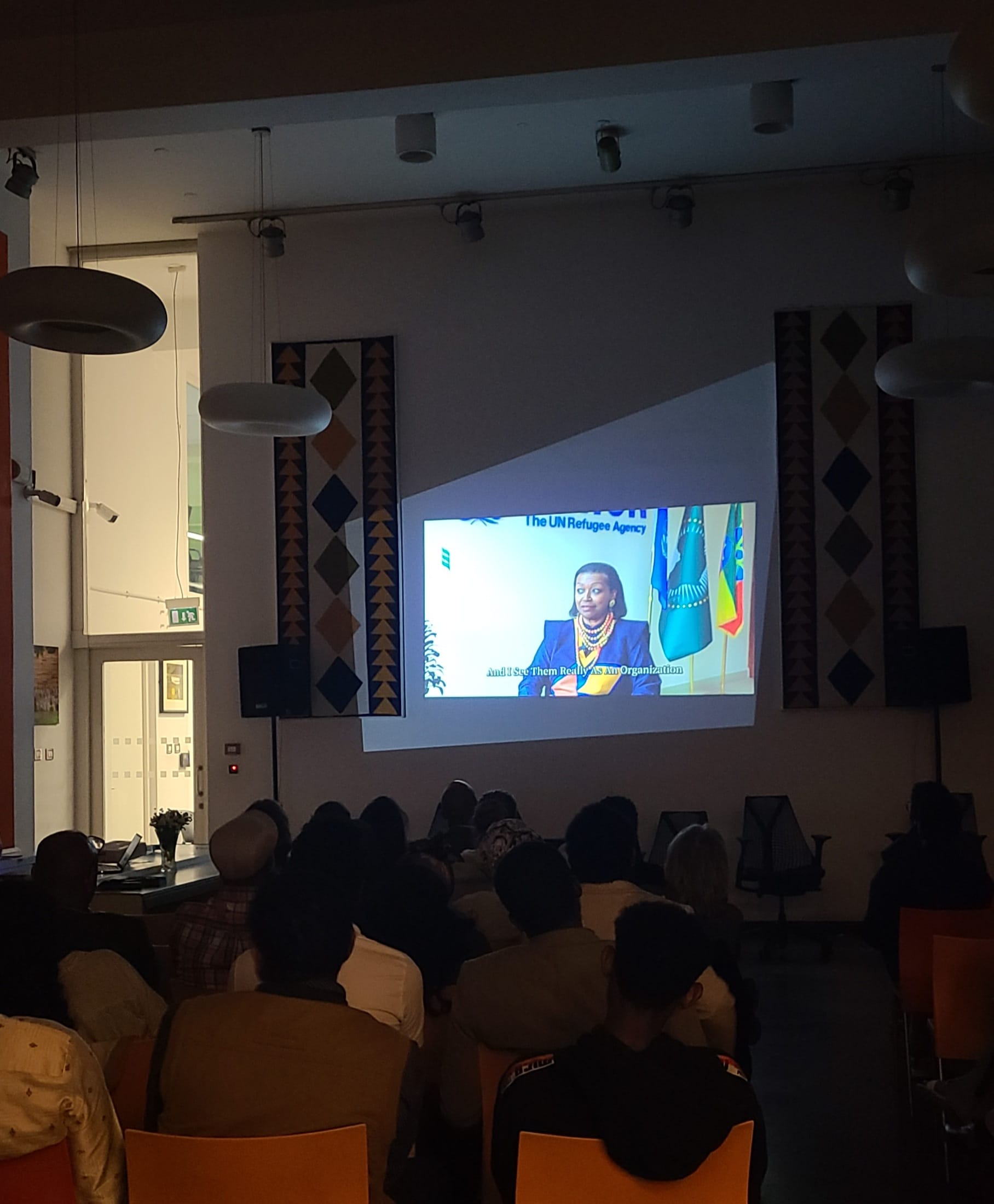
The report had documented the journey. The founder had told the story behind it. The film brought the people within that story closer.
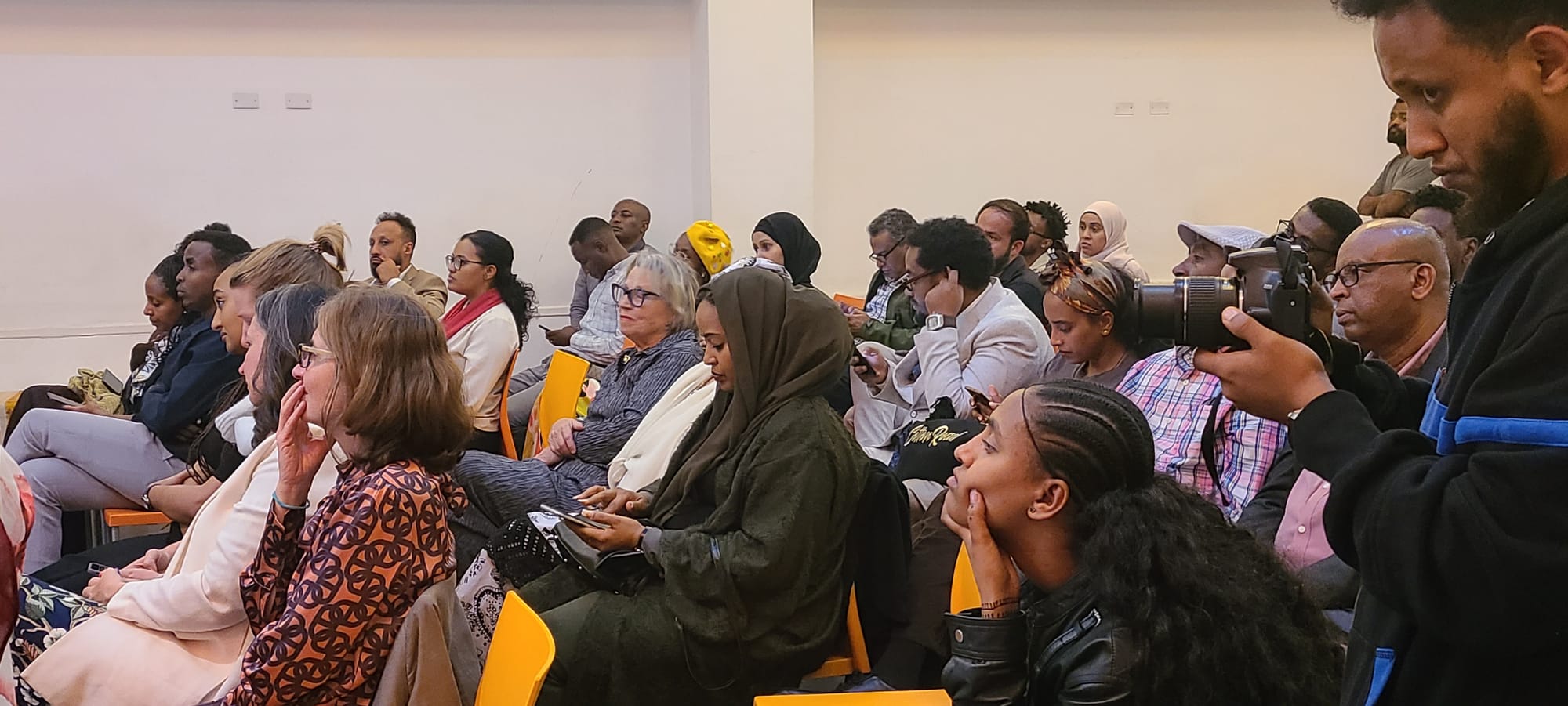
It offered a different way of understanding impact, not only through activities and achievements, but through the experiences, relationships, challenges, and aspirations of the people who shaped the journey.
For an evening centered on dignity, that mattered.
Because dignity is not an abstract concept. It is experienced when a person is trusted with responsibility, given an opportunity, heard, valued, and able to contribute.
The Conversation: Economic Inclusion Through Social Enterprise
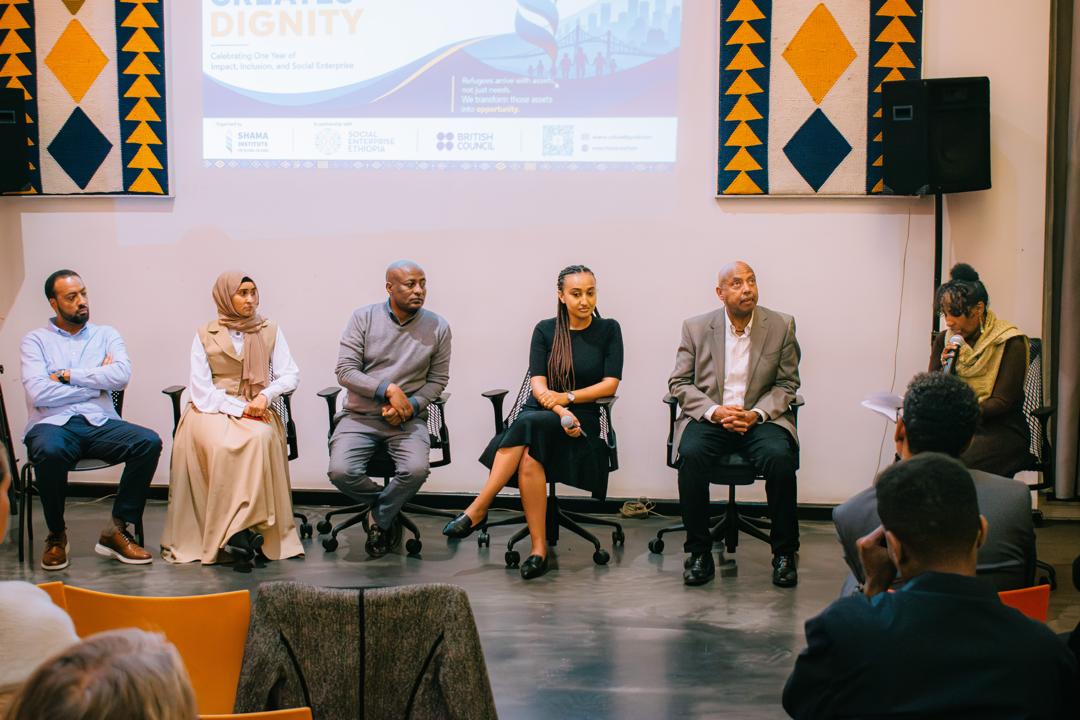
The evening’s central dialogue followed with the panel discussion “Economic Inclusion Through Social Enterprise,” moderated by Ms. Enguday Meskele, Country Officer for the Ethiopia Refugee Program at Independent Diplomat (ID).
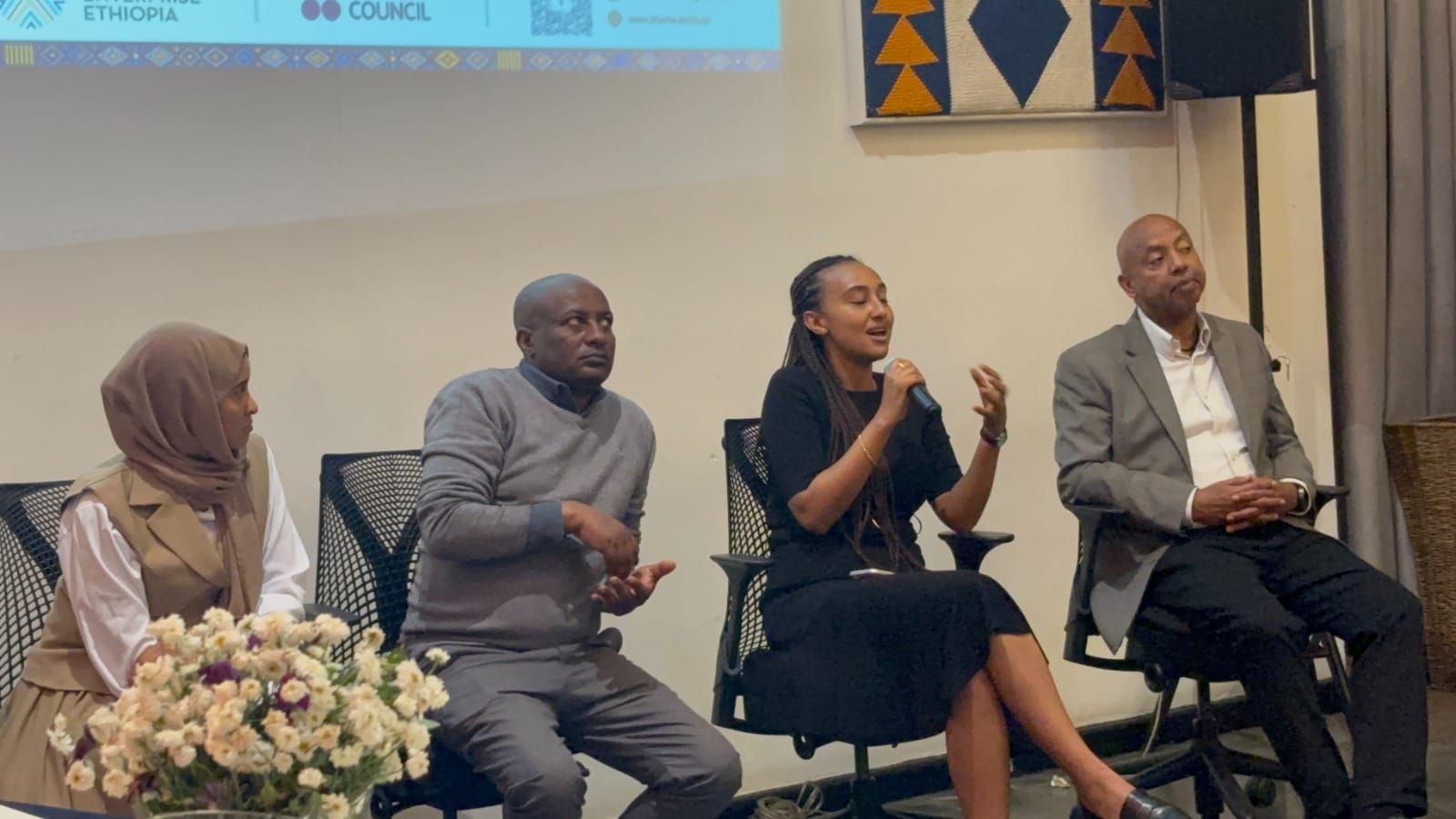
The panel brought together five perspectives from government, humanitarian response, social enterprise, entrepreneurship, and refugee-led leadership:
. Mr. Anteneh Gorfu, Senior Livelihoods and Job Creation Officer, Refugees and Returnees Service (RRS)
. Ms. Enku Stiphanos Teka, Innovation Services Country Coordinator / Digital Inclusion Lead, UNHCR Ethiopia
. Mr. Adenew Mesfin, CEO, Social Enterprise Ethiopia (SEE)
. Mr. Henok Laike, Director of Business Growth Services, Inkomoko
. Ms. Faduma Abukar, Project Manager, Shama Institute
At the heart of the discussion was a shift in perspective: Refugees are not only beneficiaries. They are economic actors.
They can be entrepreneurs, employees, employers, educators, artists, suppliers, customers, innovators, and partners.
The discussion explored what it takes to make that recognition meaningful.
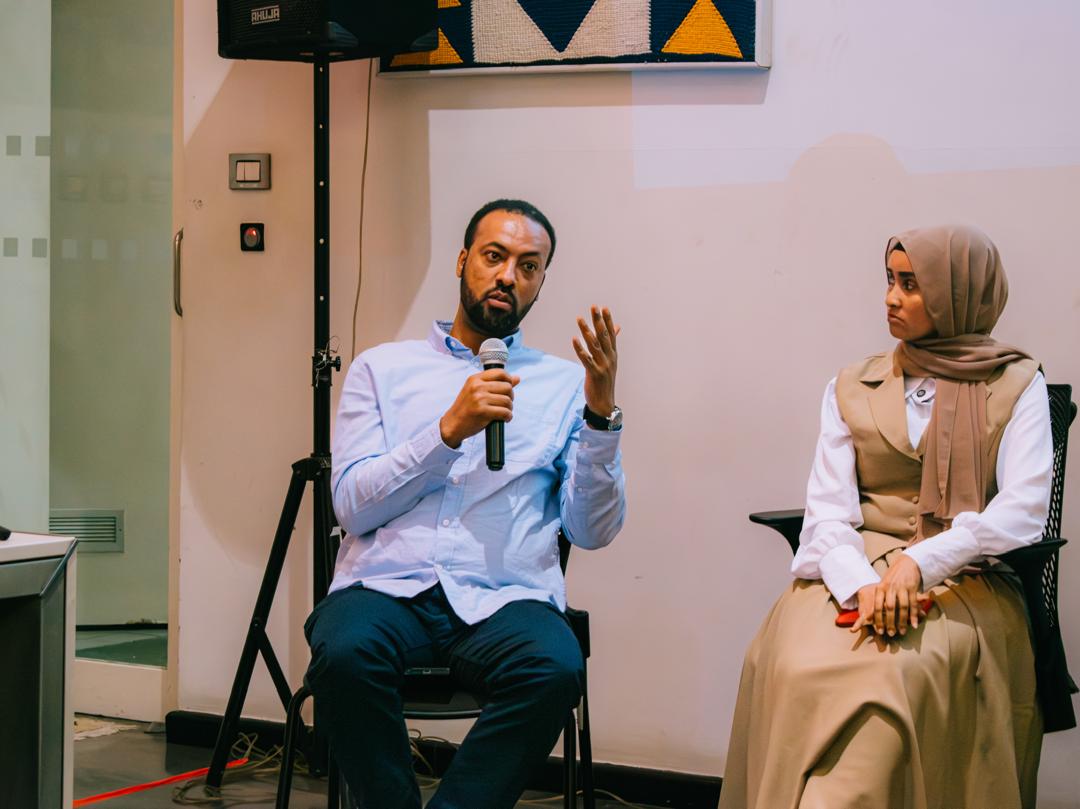
From the government perspective, economic inclusion requires coordination and an enabling environment, one where different actors can work together and where host communities are recognized as partners in the process.
UNHCR’s perspective brought digital inclusion and access into the conversation, asking not only whether people are connected, but what that connection enables them to do.
From the social enterprise and entrepreneurship perspective, the discussion moved toward sustainability: ideas need skills, networks, markets, finance, and the right support if they are to grow into viable enterprises.
And from Shama’s perspective, Faduma brought the lived experience of displacement and community leadership into the room, reminding us that economic inclusion is ultimately about people and the possibilities they are able to build.
The conversation raised questions larger than Shama itself.
If refugees bring skills, professional experience, ideas, creativity, and ambition, should they not have a role in designing the systems that shape their economic futures?
If host communities and refugee communities share the same economic and social landscape, how can they build that future together?
And if the private sector can create jobs, markets, partnerships, and value, what changes when refugees are seen not simply as people looking for employment, but also as entrepreneurs, suppliers, customers, innovators, and employers?
There were no easy answers.
But that was precisely the value of the conversation.
Economic inclusion is not simply about adding refugees to existing systems. It is about reconsidering who gets to participate in designing, building, and benefiting from those systems.
It is a shift:
from beneficiaries to contributors; from skills to livelihoods; from livelihoods to enterprise; and from enterprise to leadership.
Watch the Celebration
Looking Toward the Year Ahead
As the evening came to a close, the celebration returned to something simple: gratitude.
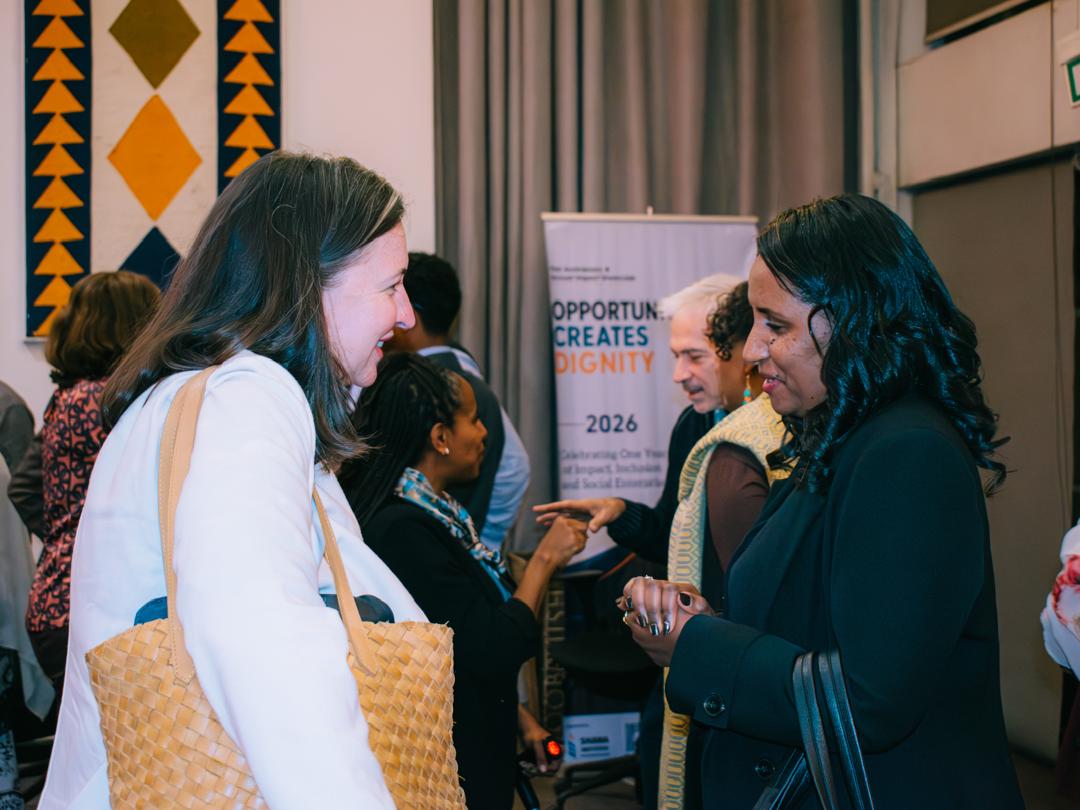
Our sincere thanks go to Social Enterprise Ethiopia (SEE) and The British Council for their partnership, hospitality, and for the work they put into making the celebration possible.
Thank you to Luwam Tesfay, Miss World Ethiopia, for hosting the evening and guiding the programme with warmth and presence.
And to the Shama team: thank you for taking an idea and making it tangible, for building it together, for believing in it through uncertainty, and for continuing to make room for what comes next.
To every speaker, partner, learner, tutor, artist, community member, supporter, and guest who joined us, thank you for being part of this first chapter.
Because one year ago, Shama was an idea.
Today, it is a growing story shaped by people who chose to believe that opportunity can be created, and that when it is, it can change what people are able to imagine for themselves and for their communities.
An anniversary can mark how far we have travelled.
But sometimes, its greater purpose is to remind us that the road ahead is still open.
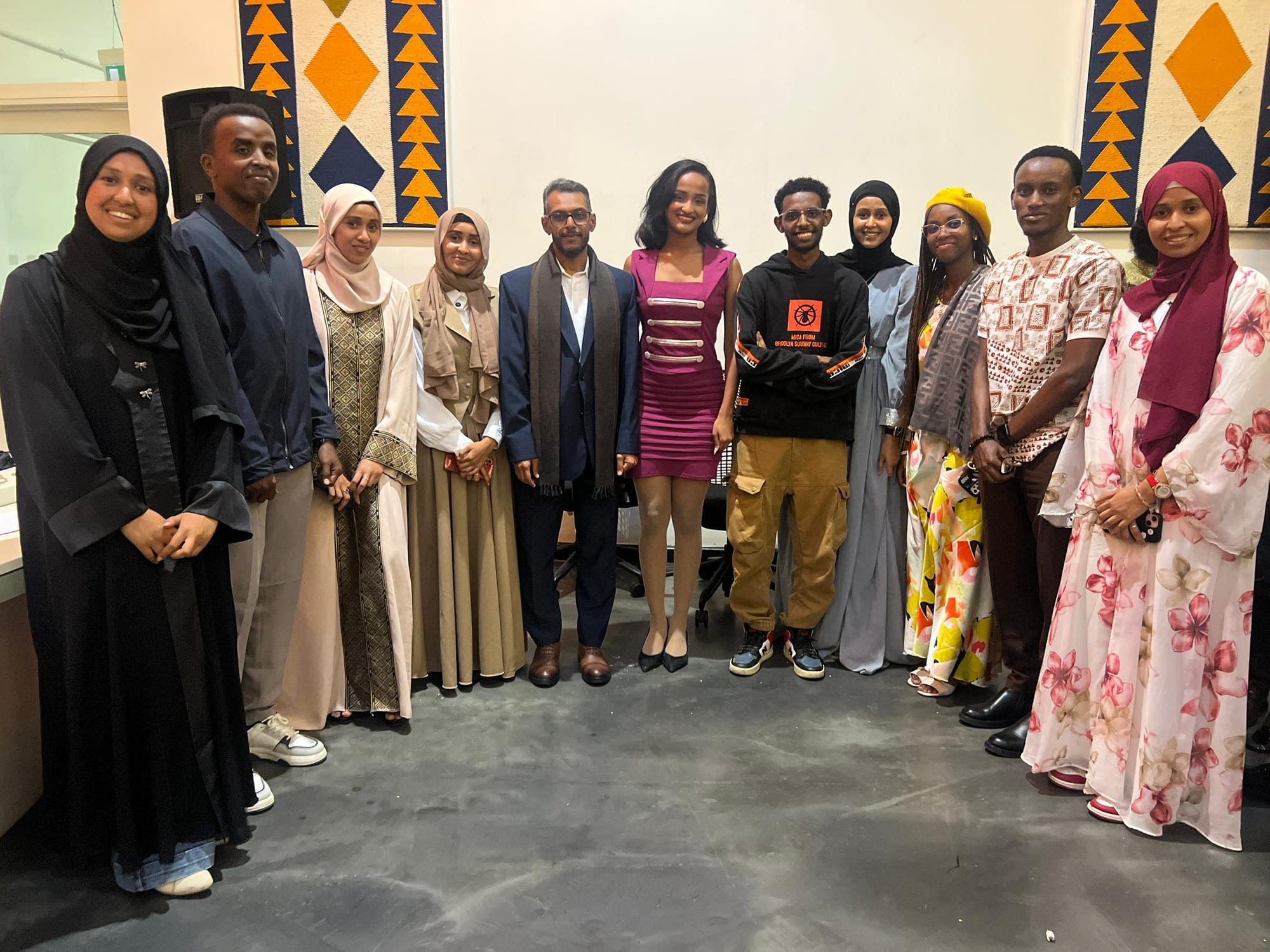
To the year ahead: may we not simply celebrate what is possible. May we create the conditions for more people to make it possible.
A year was celebrated. A future was launched.
Opportunity Creates Dignity.