
What Does "Habibi" Really Mean? A Native Arabic Speaker's Guide
Habibi (حبيبي) means "my beloved", but it can also mean buddy, darling, or a sarcastic warning. Learn the meanings, pronunciation, and tone.
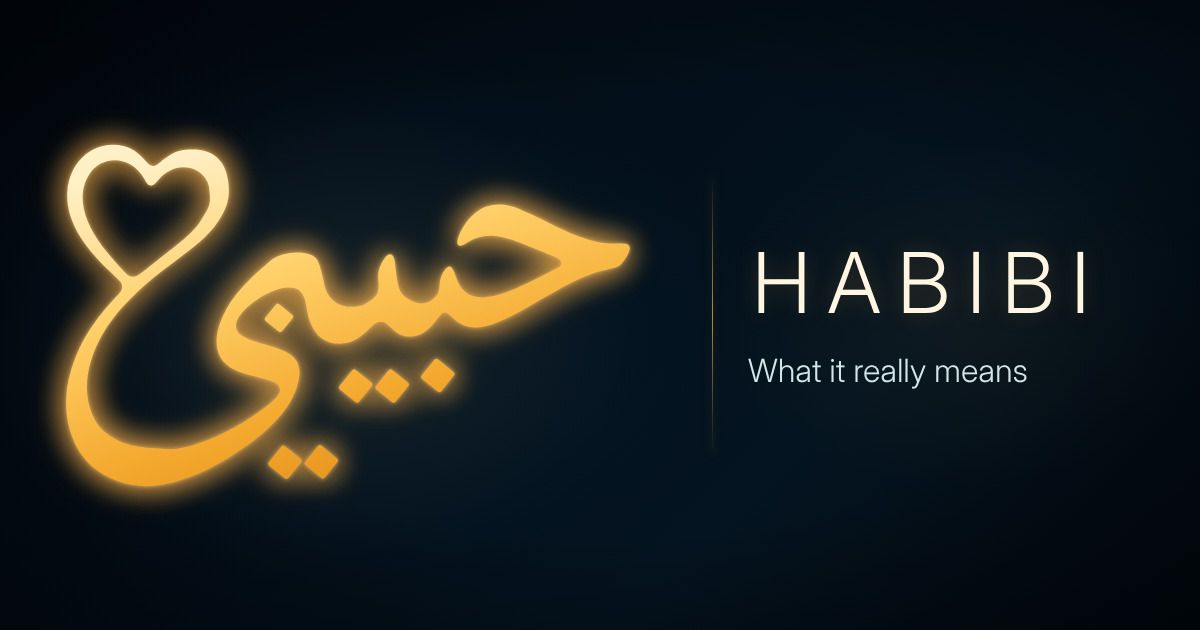
You have probably heard it a lot this week. The Arabic word Habibi (حبيبي) went viral after Michigan Senator-elect Abdul El-Sayed used it in his election-night speech on 3 November, and people worldwide started searching for its meaning. Here is the answer from native Arabic speakers.
What it literally means. Habibi comes from the Arabic root ح/ب/ب (ḥ-b-b), which conveys love. A Habib is a beloved, and habibi means "my beloved".
What it means in real life
The same word does different jobs:
- Between partners, it is tender, like "my love".
- Between friends, it often means "buddy" or "bro".
- In families, parents and relatives use it warmly.
- With strangers, shopkeepers and taxi drivers use it as friendly politeness.
- With a certain tone, it can be teasing, impatient, or sarcastic. The word is the same; the voice changes the meaning.
How to say it
Say ḥa-BEE-bee, with the stress on the middle syllable. The first sound, ح, is not an English "h". It is a breathy sound made by tightening the throat. To a woman, say حبيبتي (habibti).
A tip for learners
Using habibi warmly is safe. A sarcastic habibi from a non-speaker can sound mocking, so when in doubt, say it kindly.
Habibi's cousins
Almost every language has its own word for "my love". In Amharic it is ፍቅሬ (fik’irē), in Swahili mpenzi, in Somali gacalo, in French Mon chéri, and in Tigrinya it is ፍቑር (Fequr).
Want to say it like you mean it? Learning a language is about tone, culture, and people, not only vocabulary. Book a free first session with one of our native Arabic tutors via this link.
Source for the news context:
Why Abdul El-Sayed called JD Vance 'habibi' in his victory speech | FOX 2 Detroit
'JD, habibi.' Arabs celebrate El-Sayed's use of a term of affection in his victory speech