
Ethiopian Coffee: A Journey to the Soul of the Land Where Coffee Becomes Memory, Identity, and a Timeless Human Experience
Explore the Ethiopian coffee ceremony, a traditional ritual of roasting and brewing coffee that reflects culture, hospitality, and deep human connection.
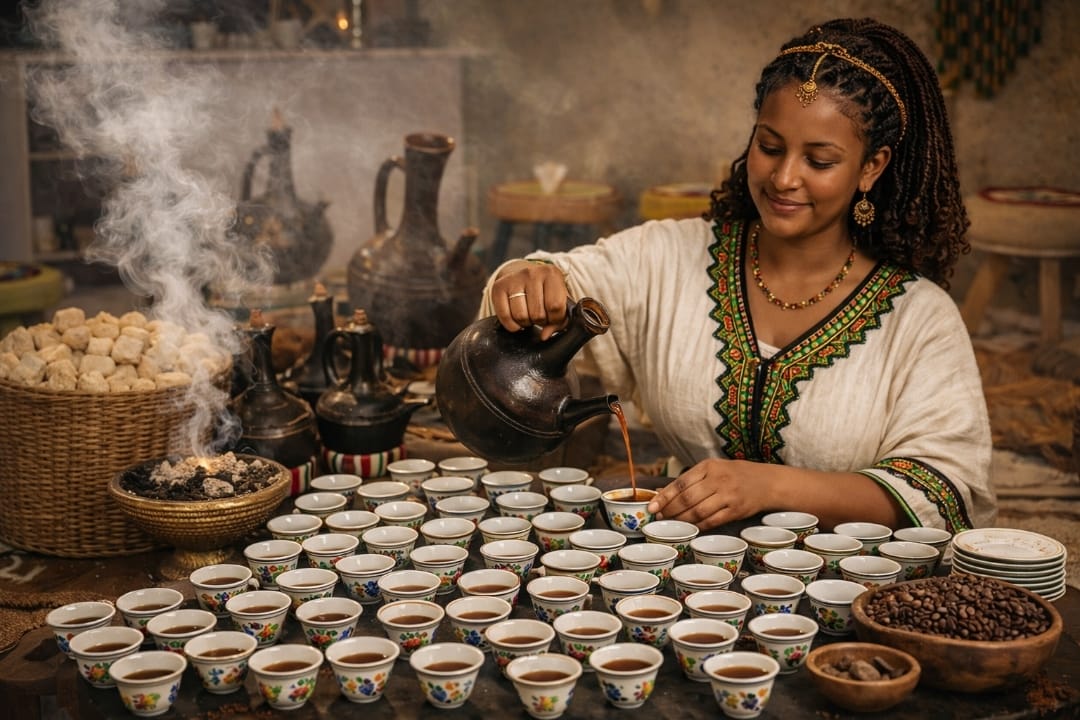
.An Experience That Is Not Just Coffee But Life Itself. In Ethiopia, coffee is not a drink served in haste, nor a daily habit performed without feeling. It is a complete experience, lived slowly and respectfully, as if time itself pauses in its presence. From the green mountains of “Kaffa,” the birthplace of coffee, to homes filled with the scent of incense and freshly roasted beans, Ethiopian coffee takes you into a completely different world, a world of warmth, silence, and deep human connection. That is why the Ethiopian coffee experience is one of the most unforgettable moments for travelers visiting Ethiopia.
Ethiopia: The Birthplace of Coffee Ethiopia is widely recognized as the birthplace of Arabica coffee, where the story of coffee began long before it reached the rest of the world. In the deep forests of Kaffa, coffee trees have grown naturally for centuries, remaining deeply connected to the land that first gave them life. A famous Ethiopian legend tells the story of a young goat herder named Kaldi, who noticed his goats becoming unusually energetic after eating red cherries from a strange tree. From that moment, humanity’s journey with coffee began. But in Ethiopia, this is not just an ancient story it is part of a living identity.

Ethiopian Coffee: When the Land Becomes Flavor Ethiopian coffee is not a single taste; it is an entire universe inside a cup. It carries floral aromas, fruity sweetness, hints of honey, sometimes deep chocolate notes, and sometimes a light tea-like elegance. This diversity is not accidental. It comes from high-altitude mountains, volcanic soil, natural rainfall, and traditional farming methods deeply connected to nature. But the deeper truth is this: coffee here is not just agriculture, it is the land itself expressed as taste.
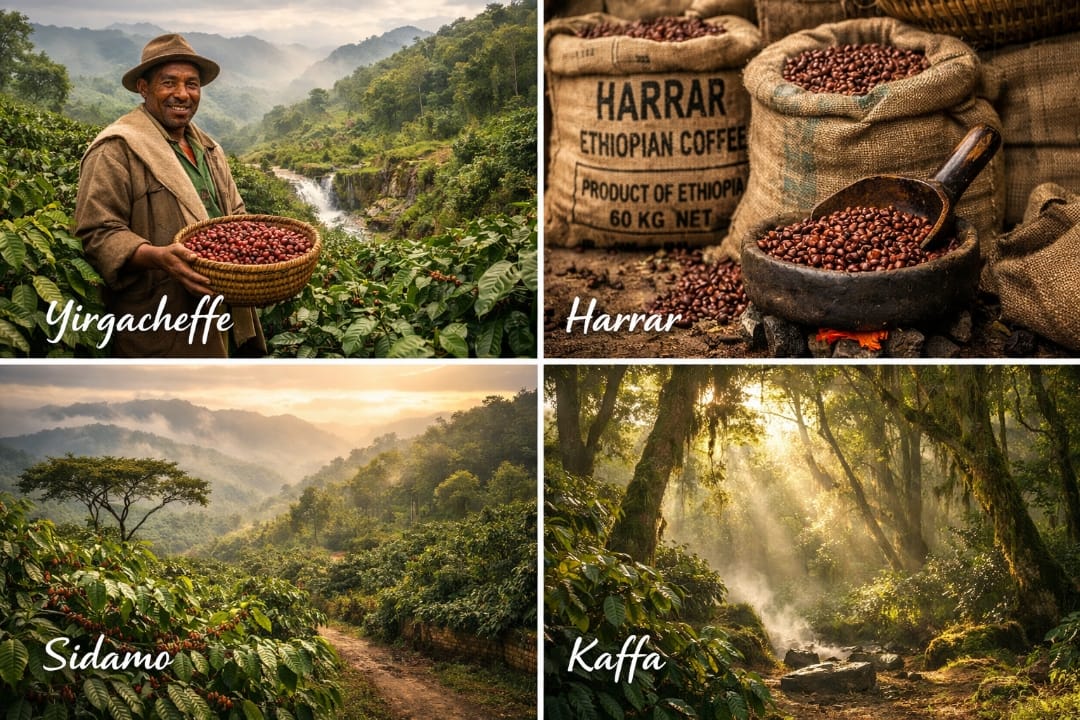
Different Spirits of Ethiopian Coffee. In Yirgacheffe, coffee is light, floral, and clean like a fresh morning. In Sidamo, it carries a gentle balance of sweetness and softness that feels close to the heart. In Harrar, it becomes bold and deep, with an ancient character that feels like long storytelling. And in Kaffa, we are not simply speaking of a farming region but the very origin of coffee itself.
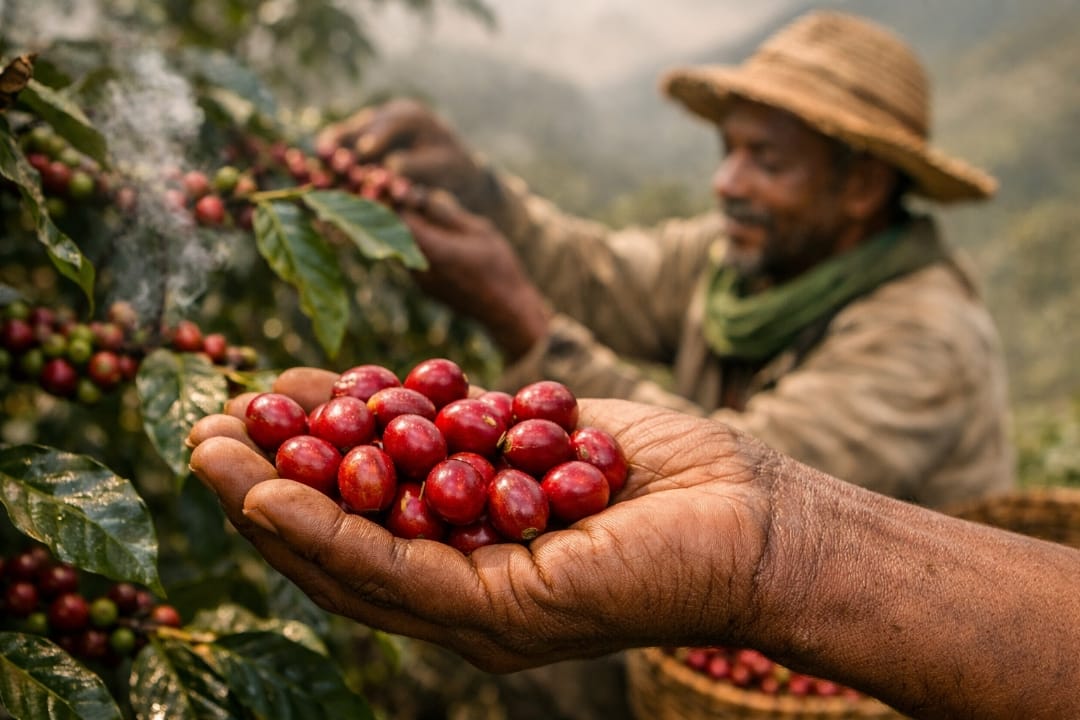
Habanna: The Small Beginning That Holds an Entire World. “Habanna” is not just a coffee bean. It is the beginning of everything. Inside it exists: earth, rain, sunlight, the farmer’s effort, and the patience of nature itself. From this small seed begins the journey of roasting, grinding, and brewing in the jebena until it becomes a cup filled with meaning.
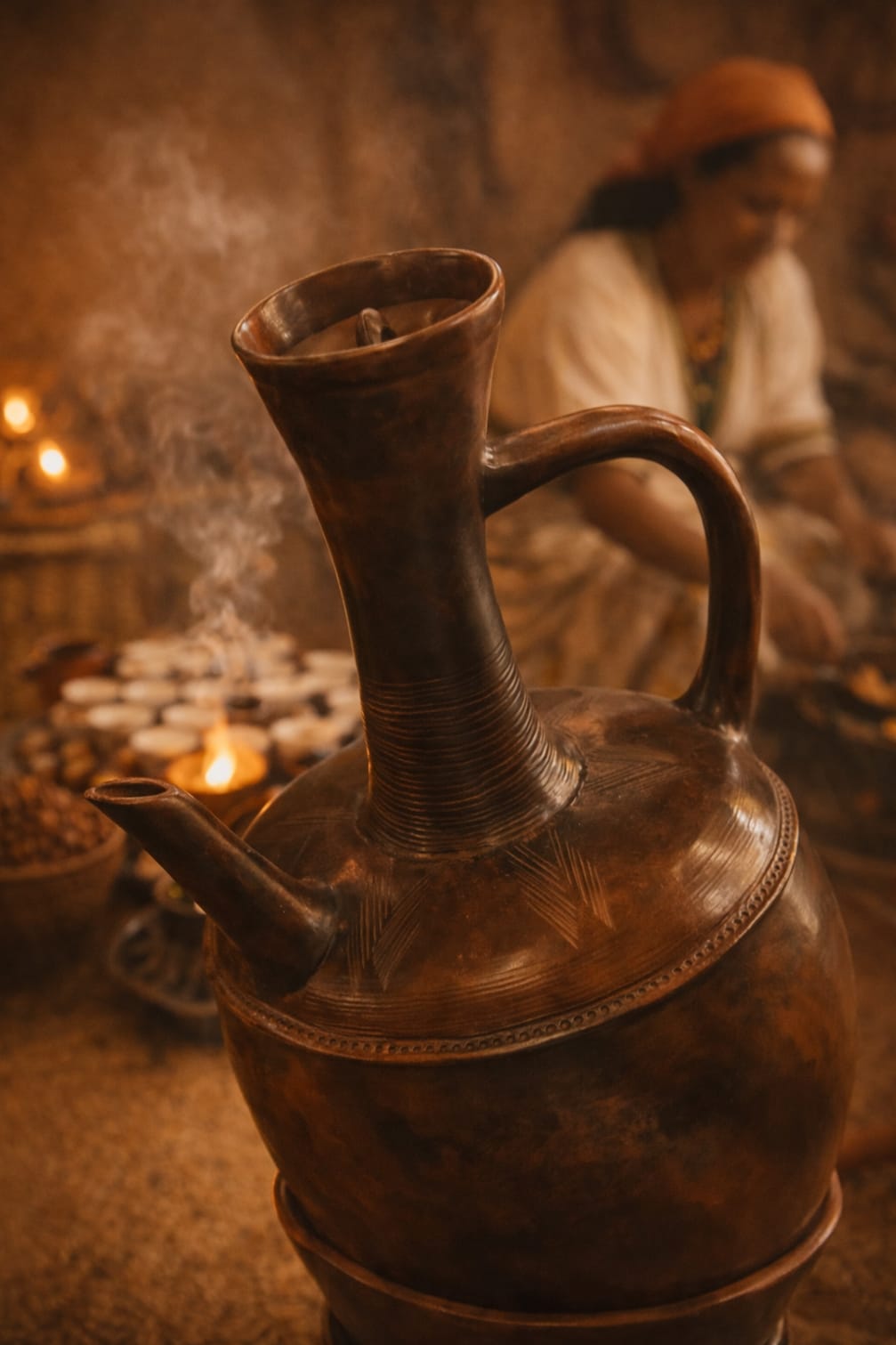
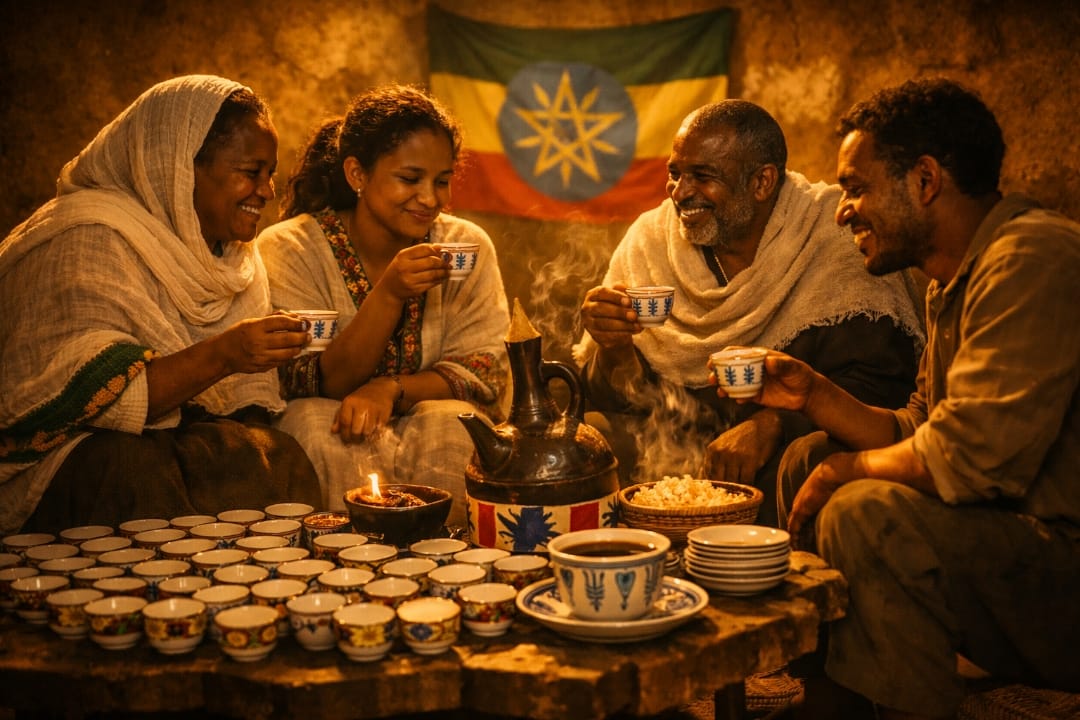
The Jebena: The Heart of the Home and the Spirit of Hospitality. The jebena is not just a vessel. It is the heart of the home itself. Around it, families, guests, and even strangers gather, turning moments into connection. Coffee here is not just a drink… it is a reason for togetherness.
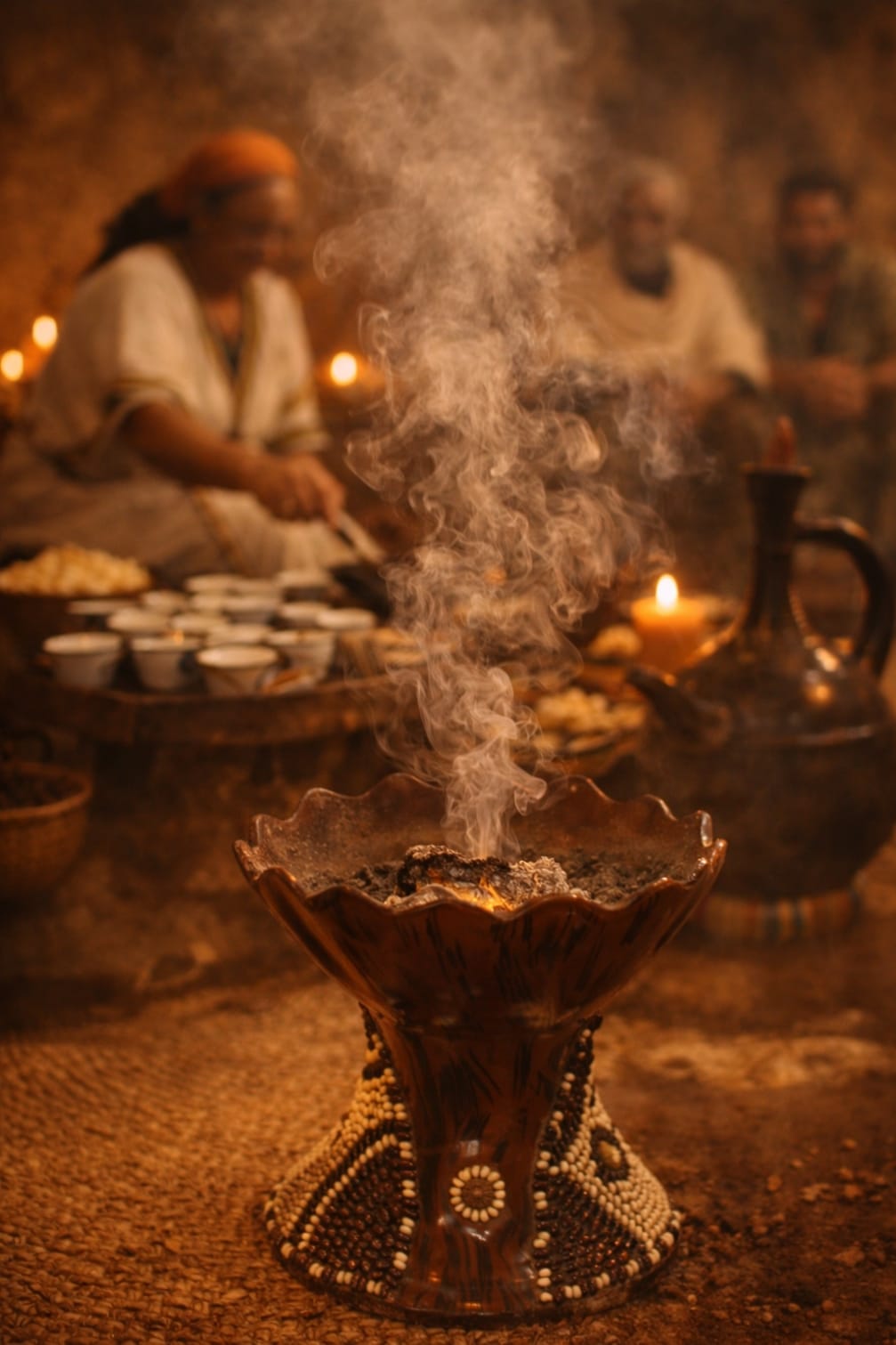
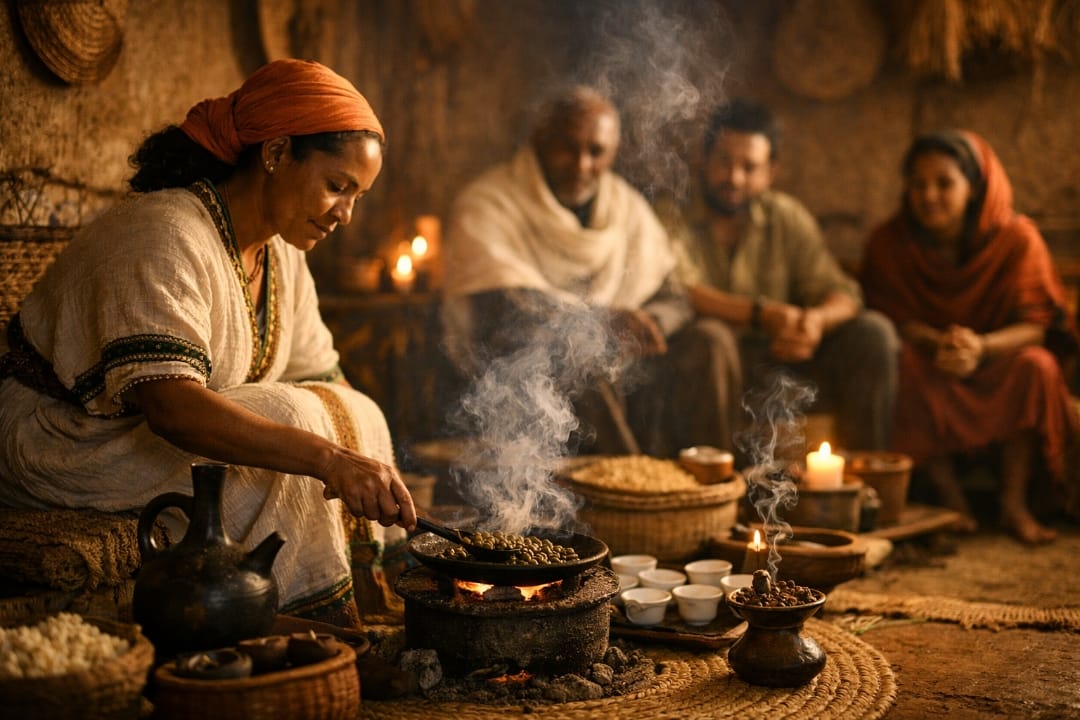
Incense: The Invisible Spirit That Is Deeply Felt. One of the most beautiful secrets of Ethiopian coffee culture is incense. While the coffee beans are roasting, incense is lit in the corner, blending with the aroma of coffee and creating a deeply calming atmosphere. Incense here is not decoration it is a silent language of welcome, peace, and respect.
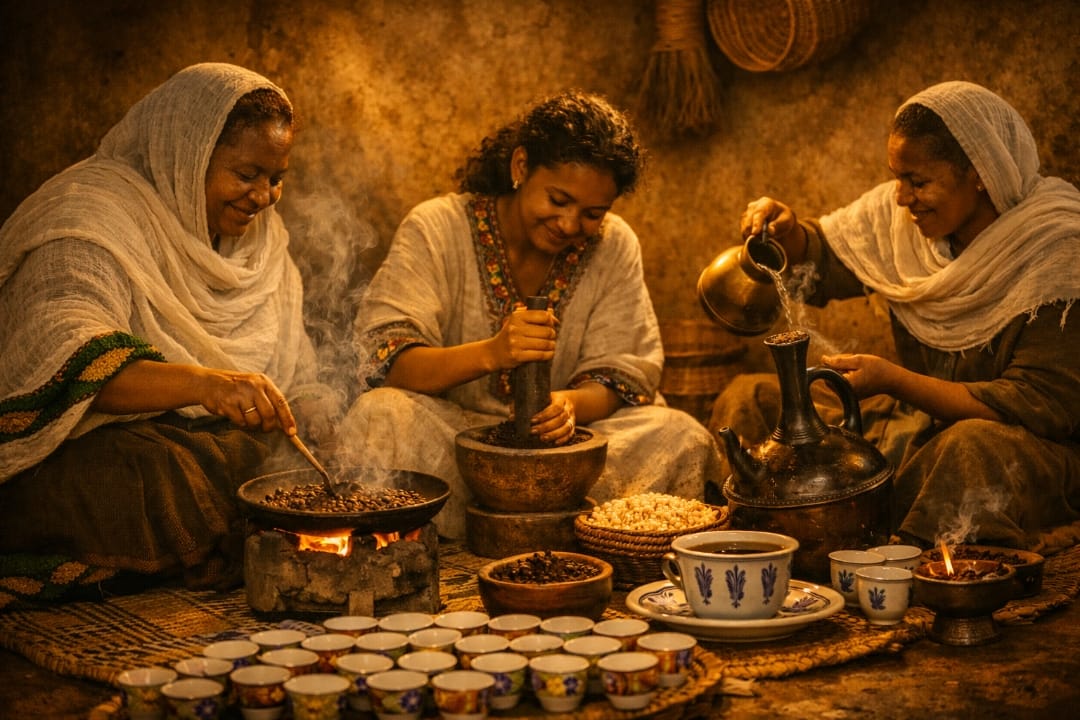
The Coffee Ceremony: When Time Slows Down. The Ethiopian coffee ceremony is not a process; it is a slow, almost meditative experience. From washing the beans, roasting them in front of guests, grinding them by hand, to brewing them in the jebena, everything is done with patience and care. No one rushes. No one checks the time. Only presence exists.
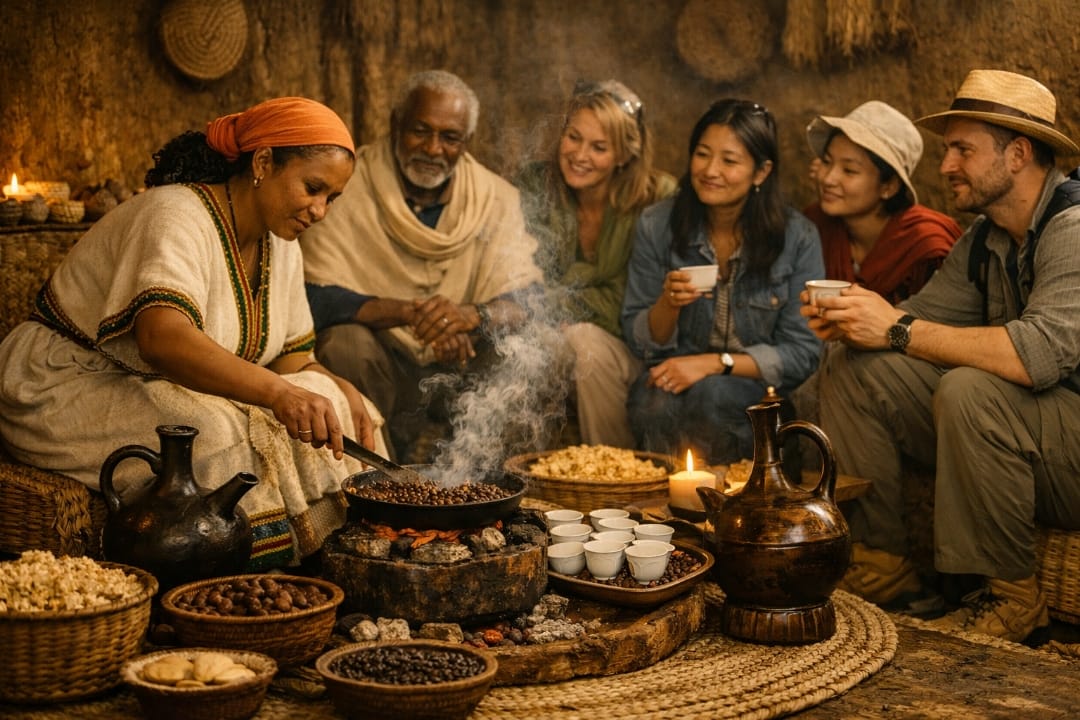
Ethiopian Coffee as a Global Cultural Heritage Ethiopian coffee and its traditional ceremony are widely recognized by scholars and cultural institutions as one of the most important examples of intangible cultural heritage. It is not just a method of preparing coffee, but a complete social ritual that reflects Ethiopian identity, hospitality, respect, and human connection. Today, the Ethiopian coffee ceremony is studied as a living tradition that continues to be passed from generation to generation, preserving its meaning despite the changes of time. It is also an essential part of Ethiopia’s global cultural image and its living heritage, recognized within the framework of intangible cultural heritage. That is why Ethiopian coffee is no longer just a local tradition; it has become a global cultural experience.
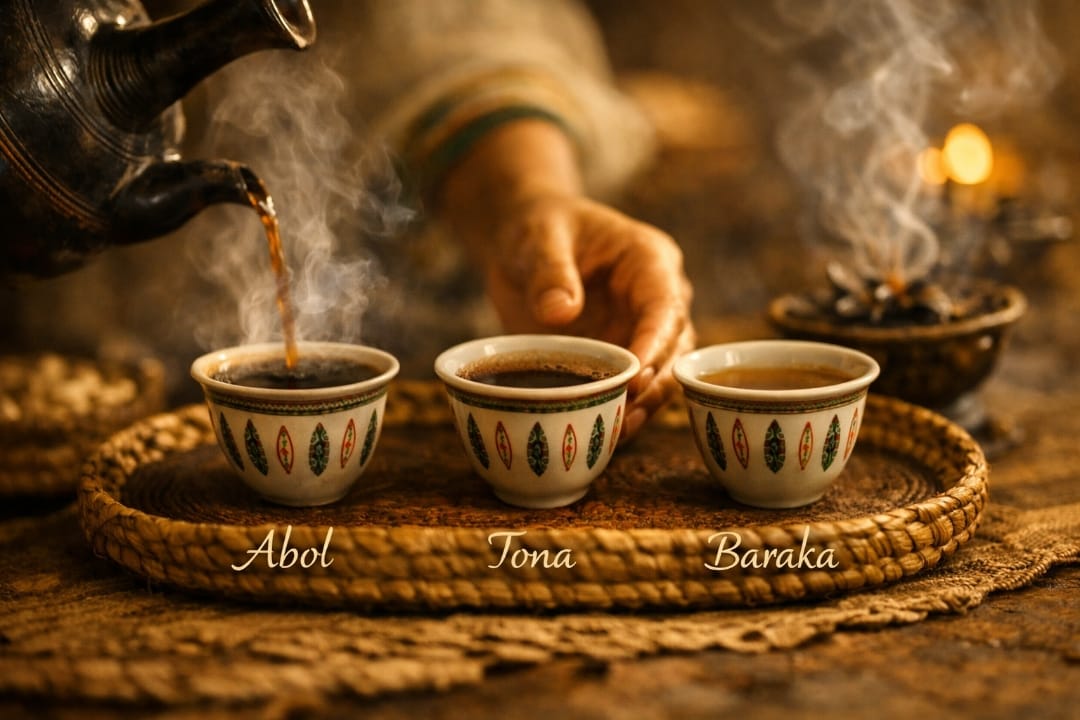
The Three Rounds of Coffee.. The first cup, Abol, is strong and symbolizes welcome and beginnings. The second cup, Tona, is lighter and represents connection and continuation. The third cup, Baraka, symbolizes peace, gratitude, and completion.
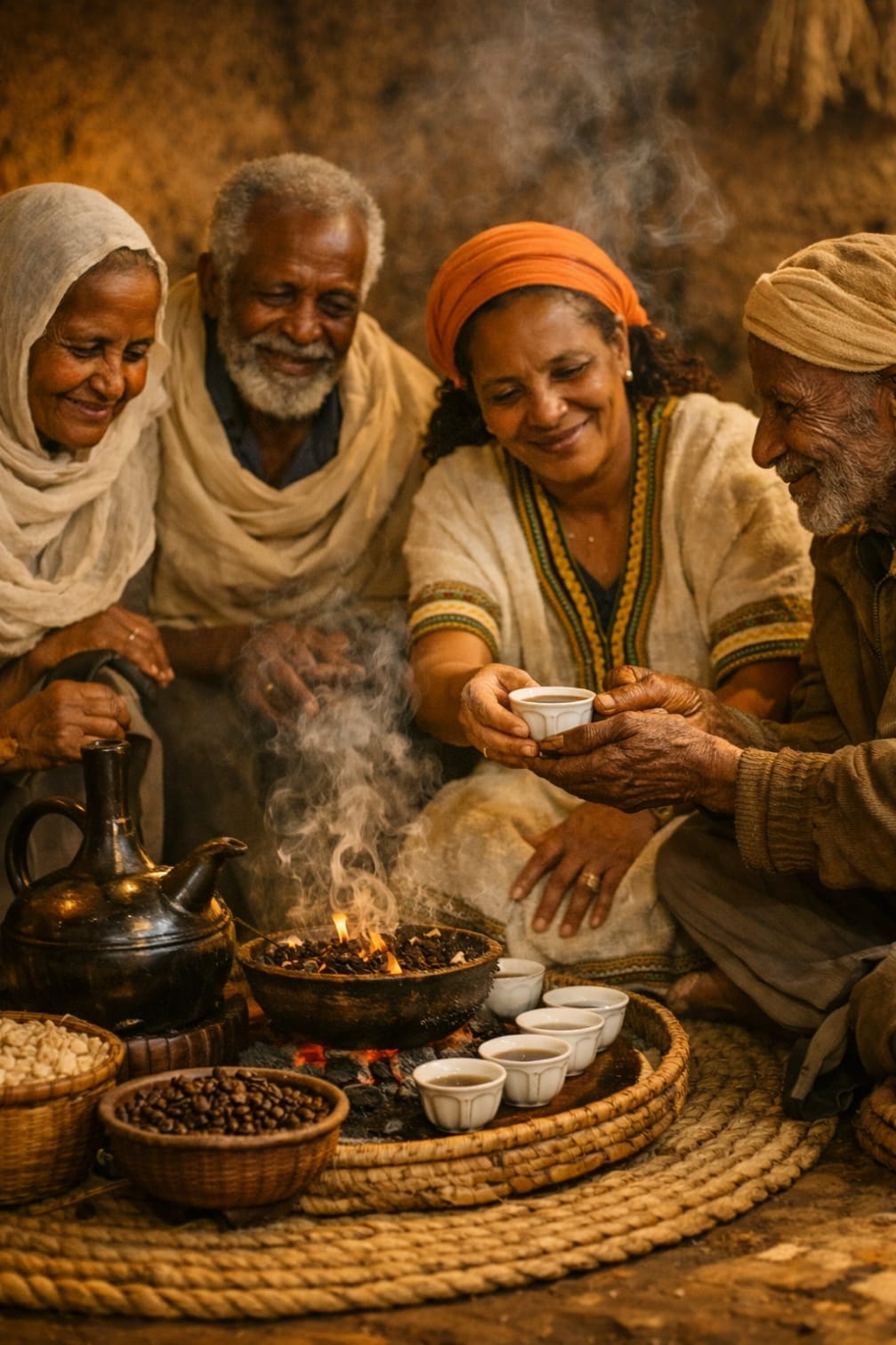
Coffee as a Healing Gathering in Ancient Times. In traditional Ethiopian culture, coffee was more than hospitality; it was an emotional space. People gathered after work or hardship, sitting quietly around coffee, sharing stories or silence. There were no immediate solutions, but there was something deeper: the feeling of not being alone. That is why coffee was seen as a natural “healing gathering” that restores emotional balance.
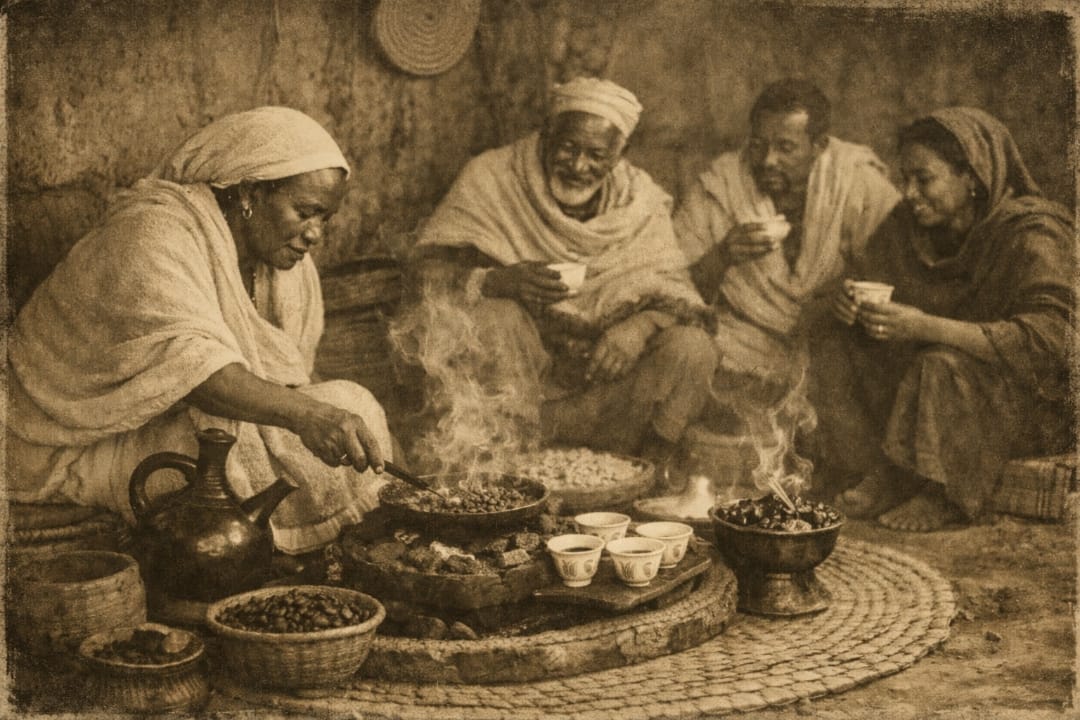
How Ancestors Used to Drink Coffee. In the past, coffee was prepared entirely by hand inside the home, from the coffee bean to the jebena. But more important than the process was the gathering itself. Coffee was slowly consumed over hours, filled with storytelling, wisdom, laughter, and quiet presence. Coffee was not a drink; it was a way of life.
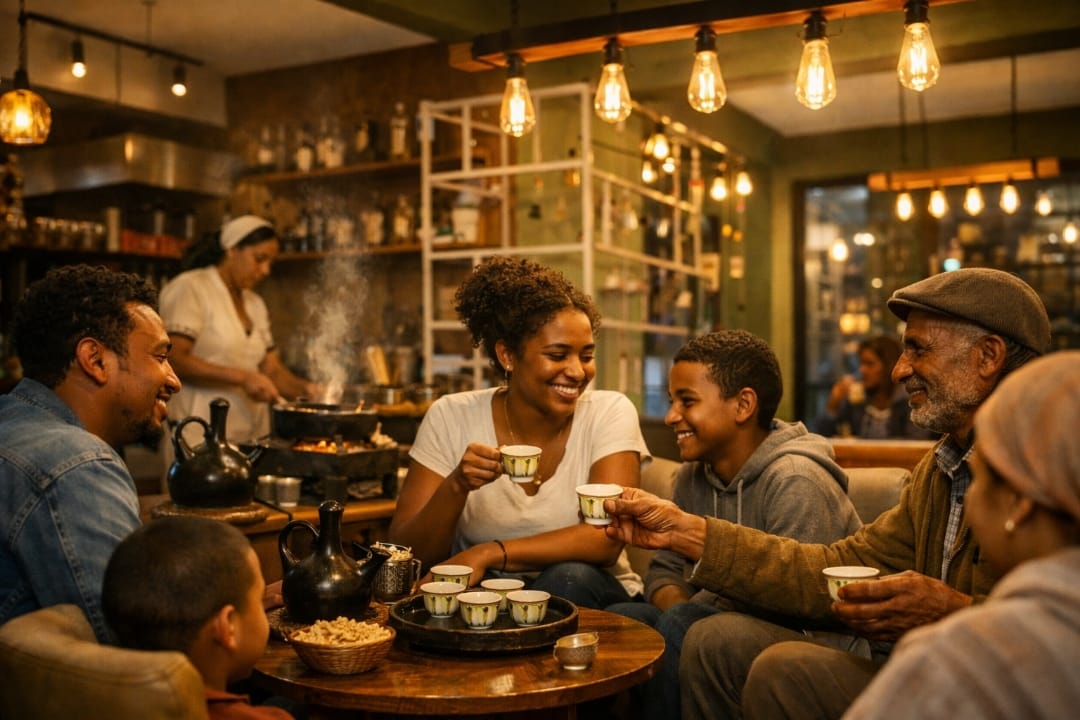
Coffee in Daily Life Even today, coffee remains an essential part of Ethiopian daily life, used for welcoming guests, strengthening relationships, and easing the pressures of life.
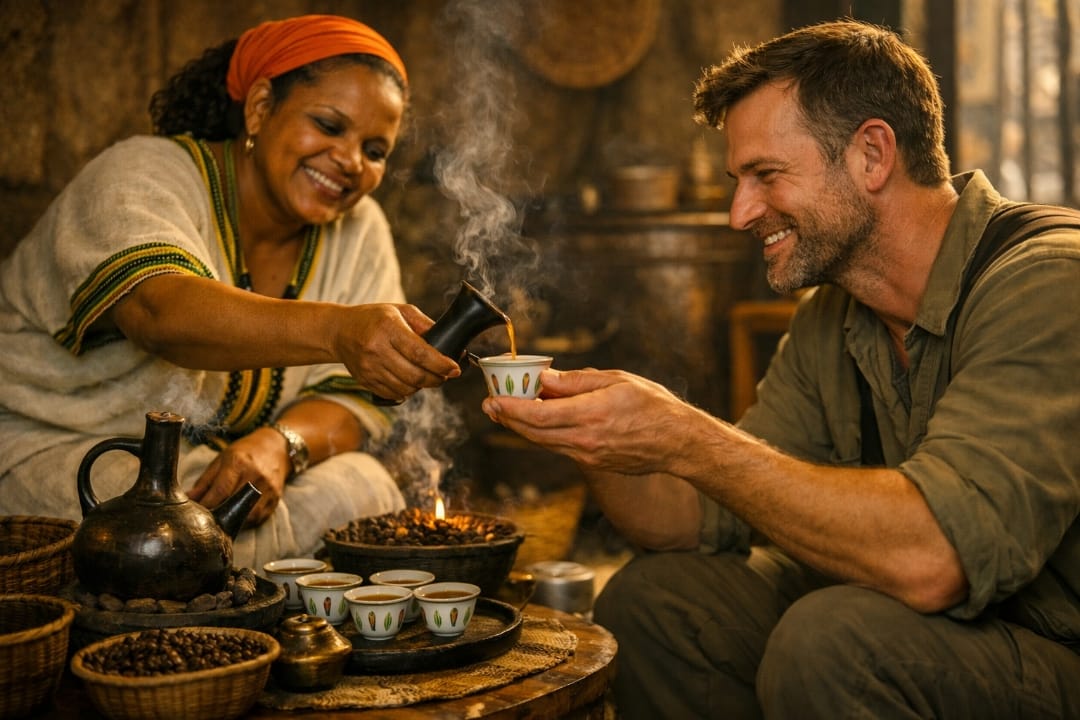
Why Travelers Love Ethiopian Coffee: Because it is not just a tasting experience, it is a full human experience. Travelers feel: aroma, sound, warmth, hospitality, and a completely different sense of time.
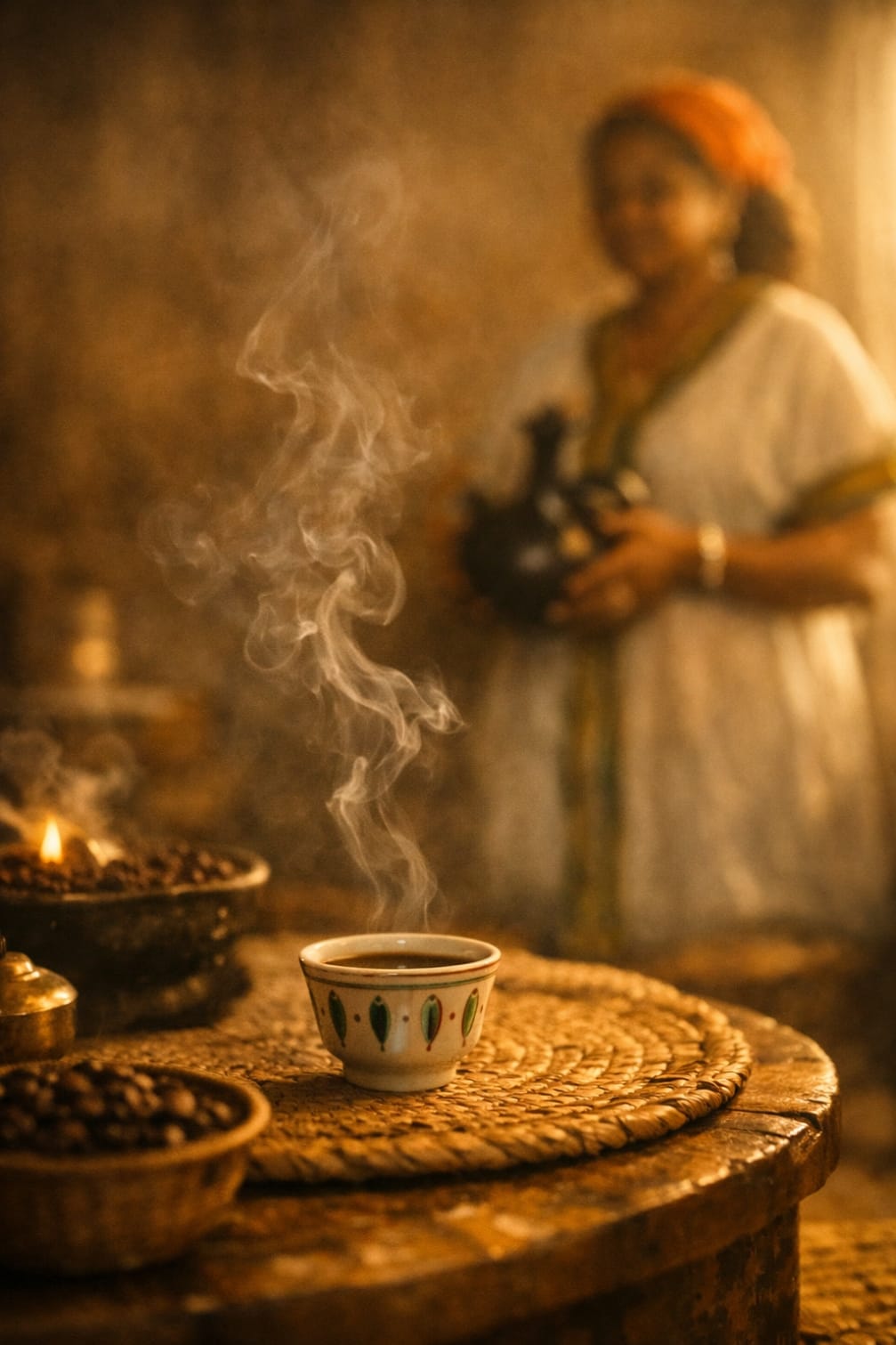
Conclusion: At the end of this journey with Ethiopian coffee, what remains is not just a drink but a feeling that is difficult to put into words. There are things in Ethiopia that are not understood only by the mind, but felt deeply by the heart. Coffee is one of them. It is not just something served to guests, it is a way of embracing them. Not a daily routine, but a human space where life becomes simpler, slower, and more sincere. From the small Habanna seed in the earth, to the slow fire that holds it, to the aroma filling the home, to the jebena gently boiling, every step carries a meaning deeper than coffee itself.
It feels as if Ethiopian coffee is telling us something quietly: that life is not a race, and human value is not only in achievement, but in the moments we pause to feel, breathe, and simply be present.
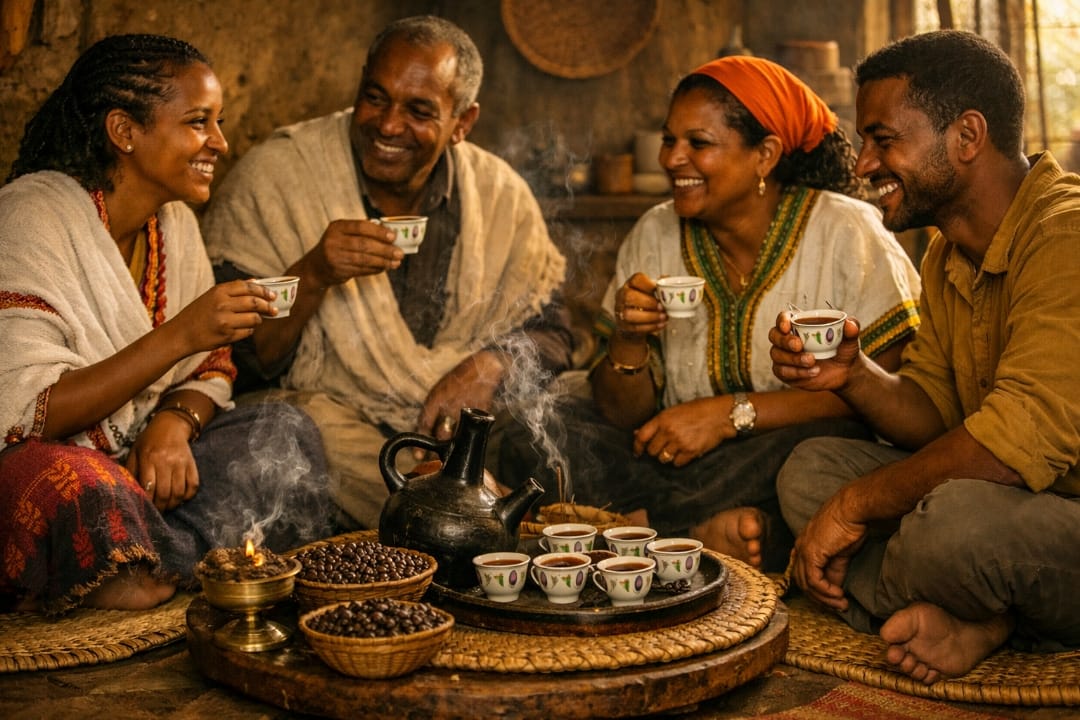
When people gather around coffee, differences disappear between host and guest, stranger and friend, young and old. Everyone sits in one circle, under the same incense, in the same moment where time itself slows down.
Perhaps that is why Ethiopian coffee is often described not just as a tradition, but as a living memory.
A memory that is not only written in books, but lived every day in homes, villages, and everywhere coffee is prepared with patience and love.
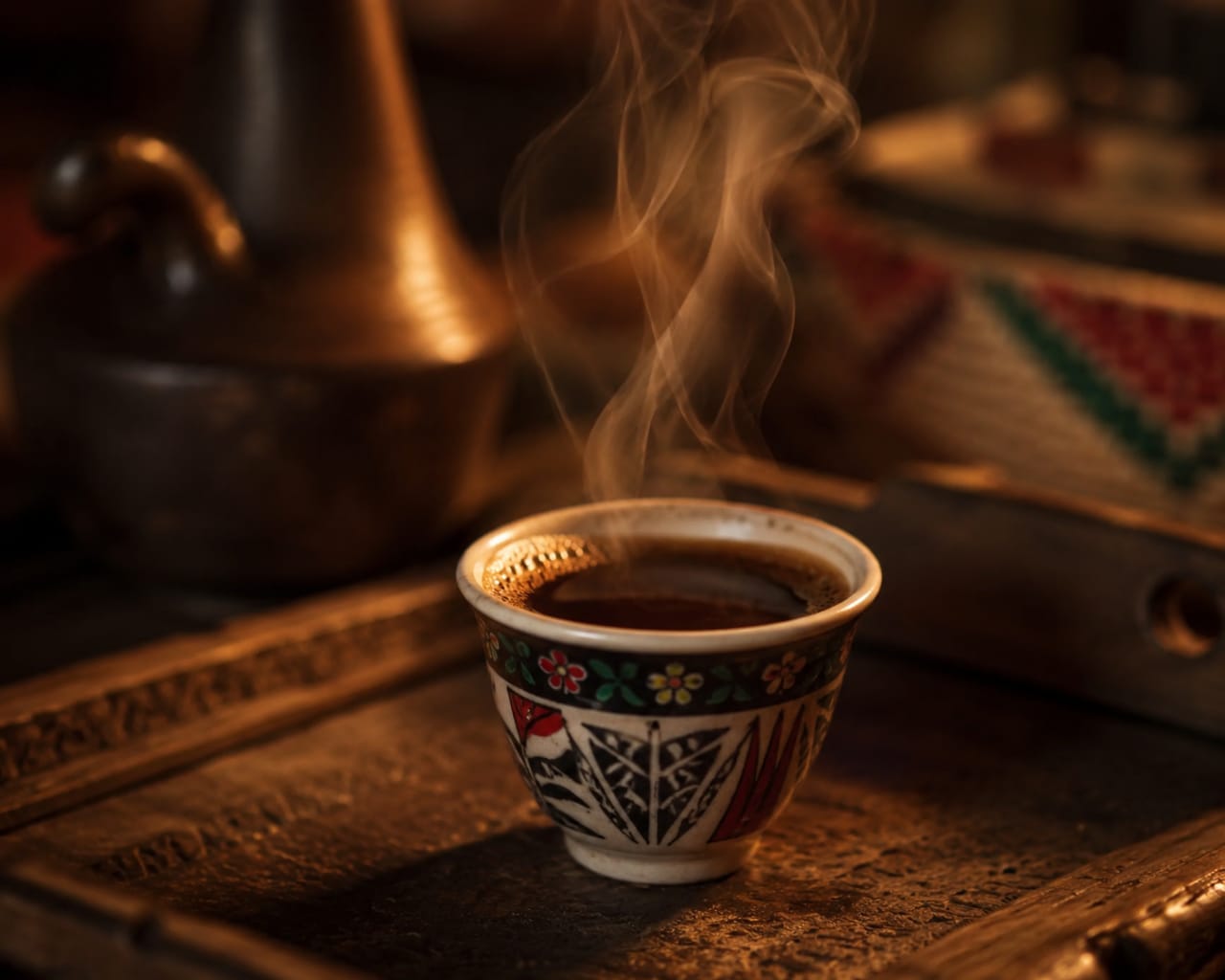
Even after the last cup is finished, something remains inside you, something that quietly changes the way you see life, making it slower, softer, and more grateful. You may forget many details of your journey, but you will not forget the feeling of sitting in an Ethiopian home, where incense and coffee blend together, and life itself feels condensed into a single moment.
And so, Ethiopian coffee does not leave you as something you drank But as something you lived. Because it is not really about coffee It is about humanity returning to its purest form: presence, connection, and meaning.
Watch the beauty of Ethiopian coffee up close, where the authenticity of traditions meets the aroma of roasted coffee beans in an experience that reflects the depth of Ethiopian culture and hospitality.